Audiovisual Support for Conferences: What Do You Need?
Organising a conference involves more than putting together a great programme. Speakers need to be heard clearly, presentations must be visible to everyone, and all the technical elements need to work together at the right moment. But what audiovisual technology do you actually need?
With professional audiovisual support for conferences, you can ensure that video, audio, creative content and stage design work together to support your event. In this article, we explain which AV equipment you may need, what to consider when planning your conference and how to prepare for a successful audiovisual production.
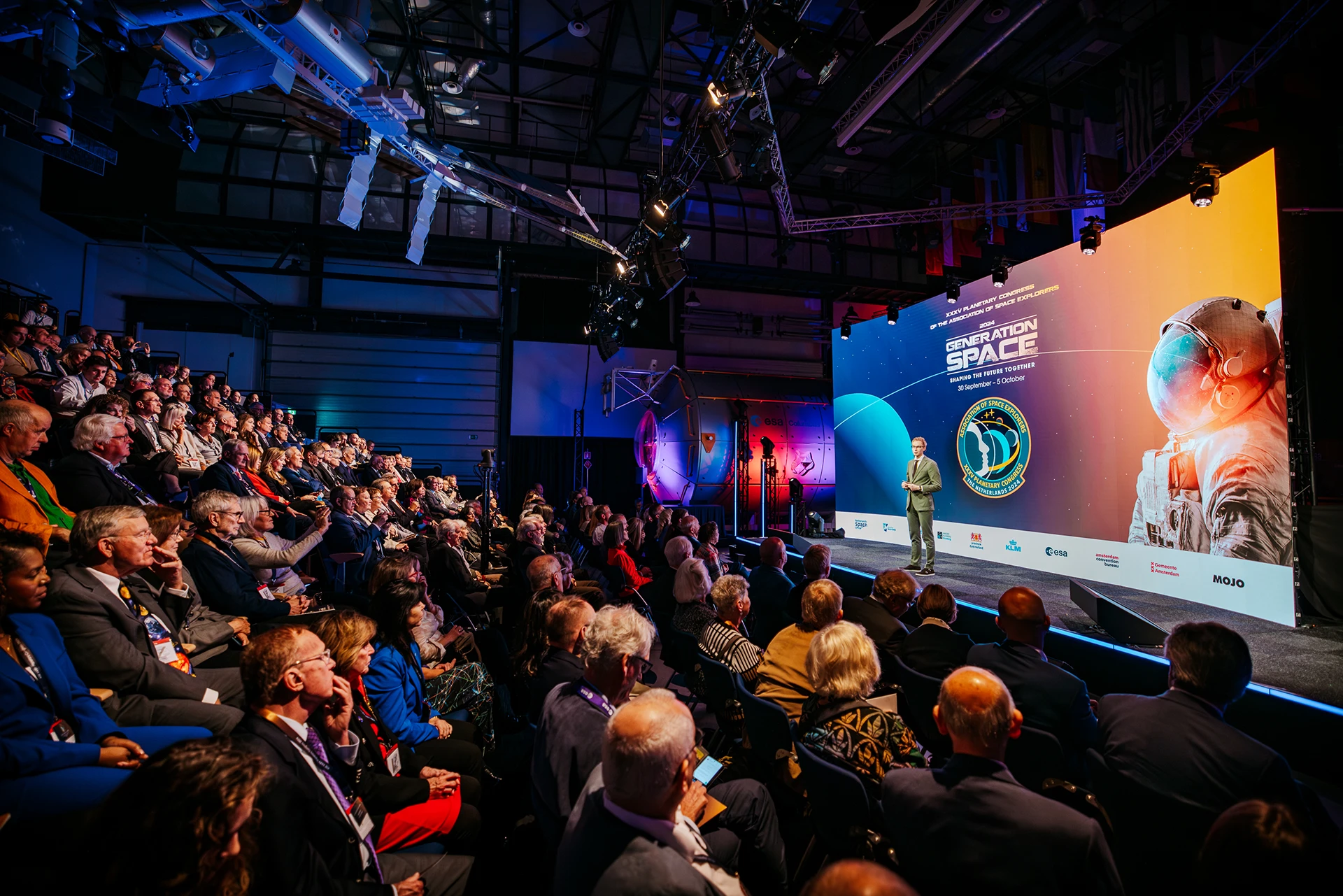
What audiovisual technology do you need for a conference?
The AV technology you need depends on the venue, the number of attendees and the conference programme. An event featuring presentations and panel discussions requires a different setup from an international conference with multiple stages, video production and online participants.
When planning your conference, the main elements to consider include:
- Display screens that make presentations and videos clearly visible.
- Audio equipment that ensures speakers can be heard throughout the venue.
- Microphones for presentations, interviews and panel discussions.
- Camera production to capture and display important moments.
- Stage lighting suited to the programme and venue.
- Technical direction to manage presentations, videos and camera feeds.
- Live streaming equipment for participants joining remotely.
What matters most is how these elements work together. An experienced AV partner can help you select the right technology for your programme, venue and the experience you want to create.
What AV equipment is essential for a conference?
Every conference has different technical requirements. However, several audiovisual elements are important for most conference productions.
Display technology and LED screens
Attendees need to be able to follow presentations, videos and other visual content without difficulty. Depending on the venue and seating arrangement, you might choose projection screens, professional displays or large LED walls.
LED screens offer considerable flexibility in size and configuration. They can also become an integral part of the stage design. When selecting a screen, consider not only its dimensions but also its resolution, aspect ratio and the content that will be displayed.
Sound systems and microphones
Clear audio is essential at any conference. Whether someone is delivering a presentation, taking part in a panel discussion or answering questions from the audience, every attendee should be able to hear them clearly.
The choice of microphones and loudspeakers depends on the venue, seating arrangement and number of speakers. You should also consider how video soundtracks and other audio content will be played during the programme.
Camera production and video
Professional camera production allows you to capture speakers, panel discussions and important moments from different angles. This is particularly valuable at larger conferences, where attendees may not always have a clear view of the stage.
Camera direction is also important when recording or live streaming a conference. It helps ensure that both in-person and online audiences can follow what is happening.
Stage design and lighting
The stage plays an important role in the overall appearance of your conference. A well-designed stage and lighting setup create an environment that reflects your organisation and supports the programme.
Lighting also helps speakers remain clearly visible and improves the quality of camera footage. By considering stage design, lighting and display technology together, you can create a consistent visual experience.
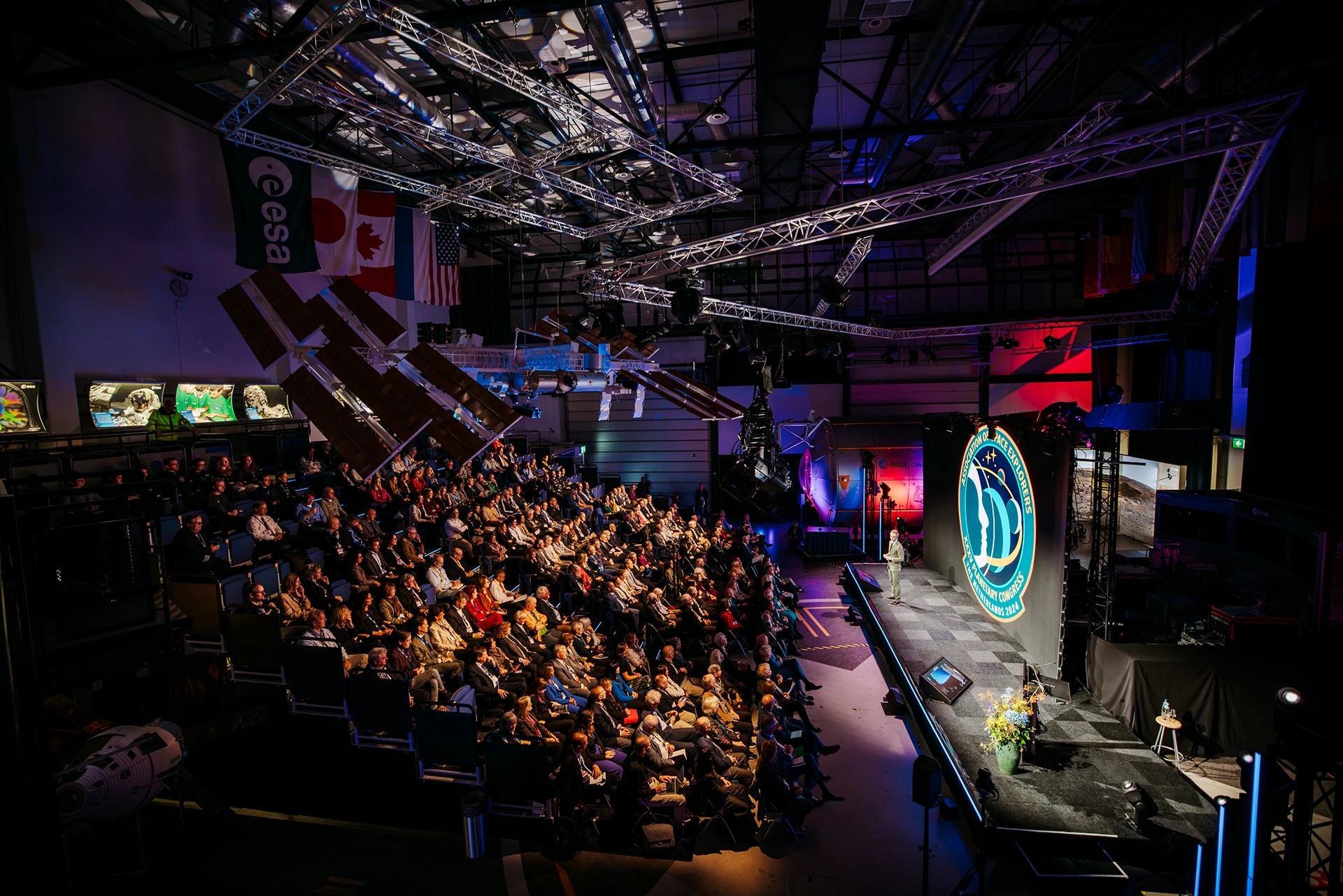
Case study: audiovisual support at ESA-ESTEC
How do these different elements come together at an international conference? The Association of Space Explorers (ASE) Planetary Congress 2024 at ESA-ESTEC in Noordwijk provides a good example.
More than 70 astronauts gathered alongside scientists, policymakers and international guests. The conference focused on sharing knowledge, inspiring stories and discussing the future of space exploration.
As a preferred partner, AVEX provided the audiovisual support for the event. The Event Facilities team was responsible for audio, video production, camera direction, stage design, lighting and LED content display.
By coordinating these disciplines from the early planning stages, AVEX helped create a conference environment where the speakers’ presentations and stories remained the focus.
How can 3D visualisation improve conference stage design?
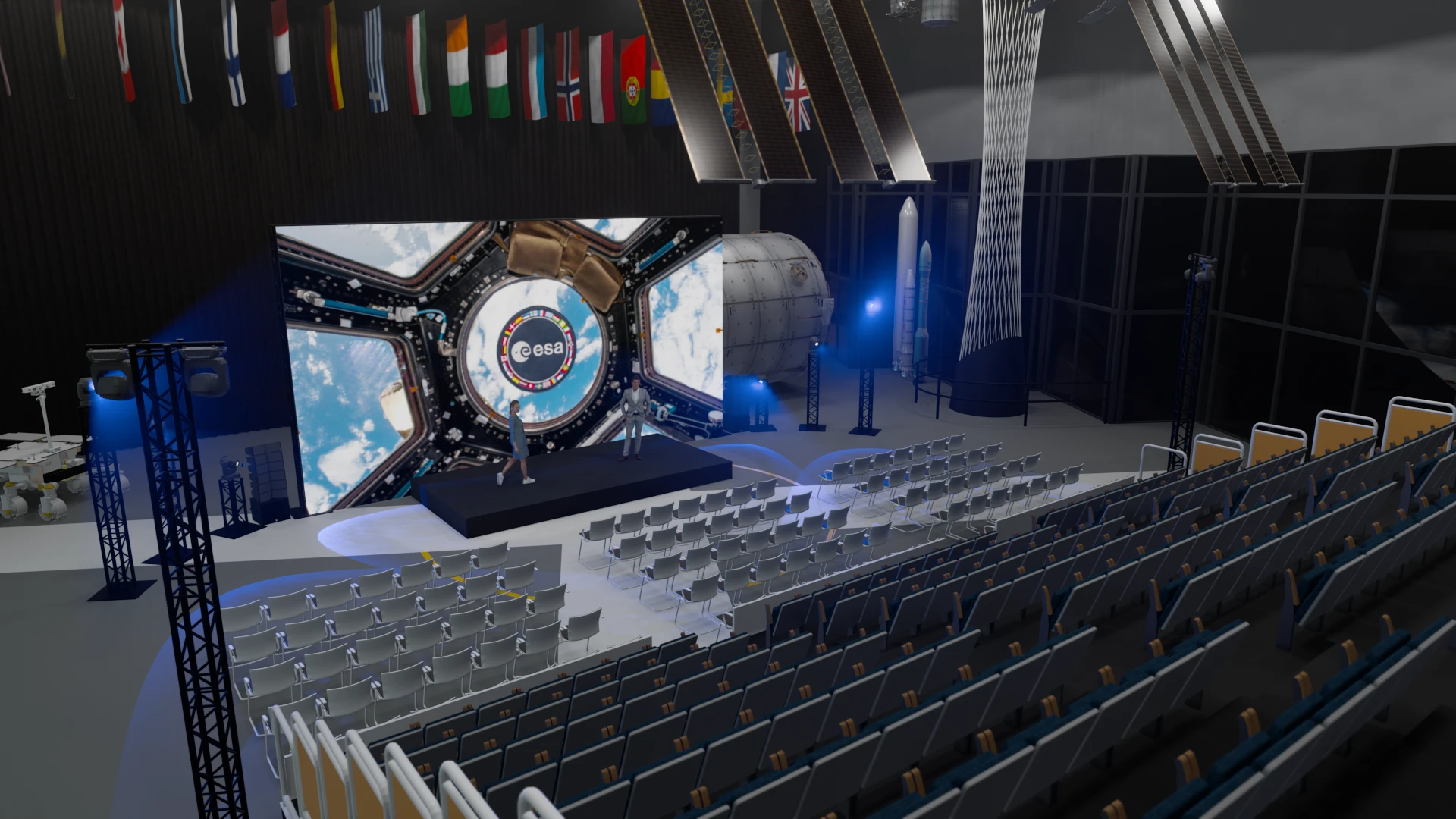
Professional conference production begins long before the first piece of equipment is installed. For the ASE Planetary Congress, AVEX’s content team created a 3D visualisation of the stage concept in advance.
This showed how the stage, lighting and large LED screen would work together. The visualisation provided a clear starting point for the technical development of the design.
A 3D visualisation allows you to see and assess the proposed result at an early stage. It helps you make informed decisions about the layout and appearance before the build begins.
When should you use an LED screen at a conference?
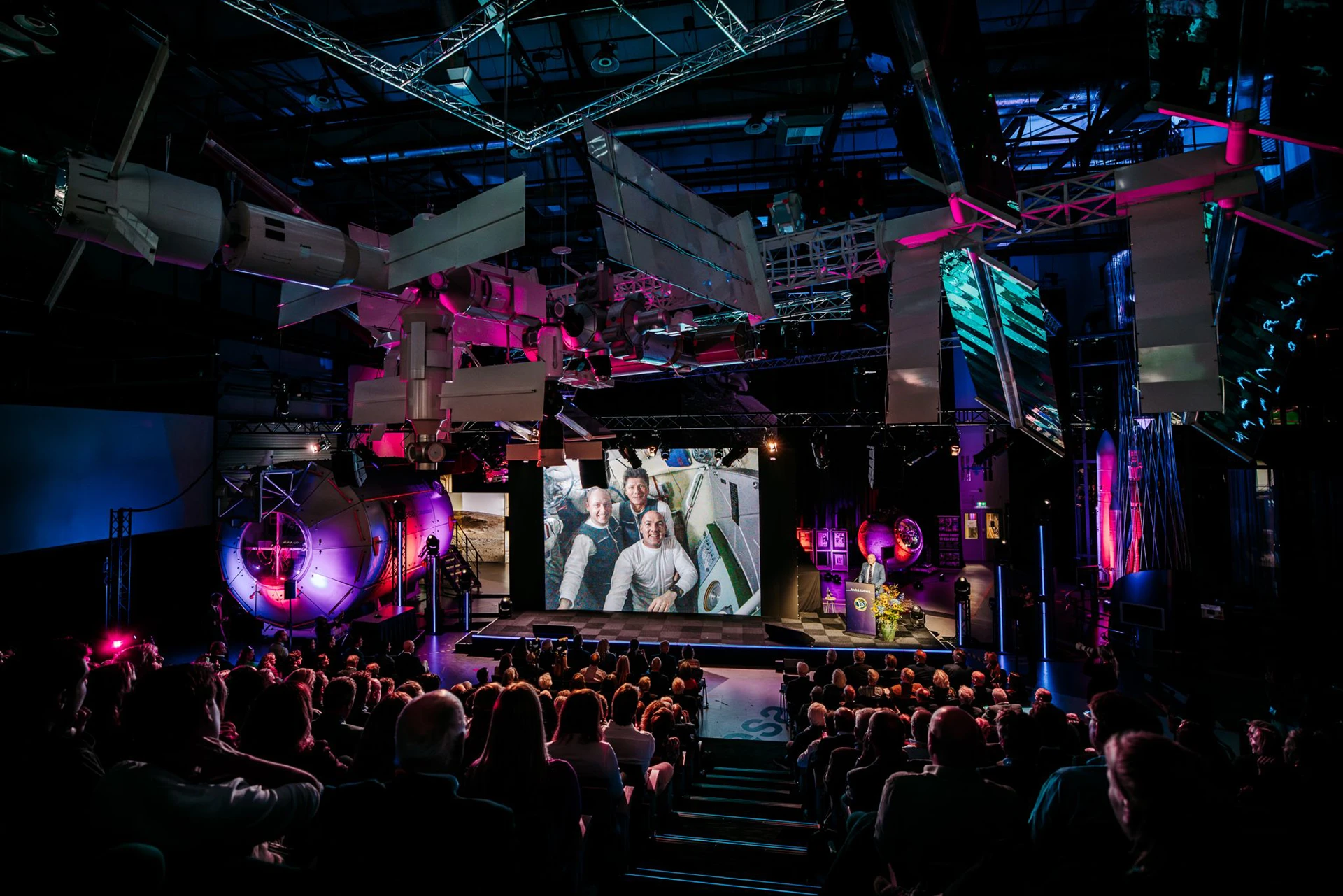
An LED screen is particularly useful when presentations and visual content need to play a prominent role. This could be at a large conference stage, in a wide auditorium or at an event where video and imagery are central to the programme.
At the ASE Planetary Congress, AVEX installed a curved LED screen measuring 8 by 4.5 metres. It displayed presentations, videos and imagery from space. Its size and curved design made it a central feature of the stage.
Choosing an LED screen is not just about visual impact. Viewing distance, available space and the type of content are equally important. That’s why it makes sense to develop the screen setup and creative event content together.
How much does audiovisual support for a conference cost?
The cost of audiovisual support varies from one conference to another. An event with a single stage and a few presentations requires a different level of technical production from an international conference with multiple cameras, a large LED screen and extensive stage lighting.
The main factors affecting the cost include:
- The venue and its existing technical facilities.
- The number of attendees and the size of the space.
- The display and audio technology required.
- The number of speakers, presentations and programme elements.
- Camera production, video recording and live streaming requirements.
- Stage design, lighting and any creative content.
- Planning, installation and on-site technical support.
A realistic budget starts with the conference programme and your objectives. Discussing the technical requirements early allows you to identify the solutions you need and make informed choices about where to invest.
What equipment do you need for a hybrid conference?
A hybrid conference brings together people attending in person and participants joining online. Delivering a good experience for both audiences requires more than a camera and an internet connection.
Remote participants need to see and hear presentations clearly. This makes professional camera production, a reliable internet connection, high-quality audio and a suitable live streaming solution important.
You should also consider how online participants will follow the programme. For example, how will presentations be displayed, when will the production switch between camera feeds, and how can remote attendees ask questions?
By planning the online experience from the outset, you can make it an integral part of the conference rather than an addition at the last minute.
What should you consider when planning audiovisual production for a conference?
Conferences often involve several programme elements taking place in quick succession. Presentations, videos, interviews and panel discussions each have different technical requirements.
It’s therefore important to consider not only the equipment but also the technical direction and coordination between everyone involved.
For the ASE Planetary Congress, AVEX brought together several disciplines:
- Audio technology
- Video production
- Camera direction
- Stage design
- Lighting design
- LED content display
By treating the technology and creative design as one production, the different elements could be coordinated effectively. Through its Events & Experiences expertise, AVEX helps organisations bring together technology, design and technical delivery.
When should you involve an AV partner in conference planning?
It’s worth involving an audiovisual partner during the early planning stages, particularly if your conference includes multiple speakers, an extensive stage design or a hybrid programme.
An AV partner can advise on the technical possibilities of the venue, the stage layout and the equipment required. They can also help plan how presentations, videos and camera feeds will be managed throughout the programme.
At international conferences, good coordination is especially important. The organiser, venue, speakers and various suppliers all have their own responsibilities.
For the ASE Planetary Congress, AVEX was able to build on its long-standing relationships with ESA-ESTEC and astronaut André Kuipers. AVEX has supported André Kuipers for many years with audiovisual production for lectures, events and theatre tours.
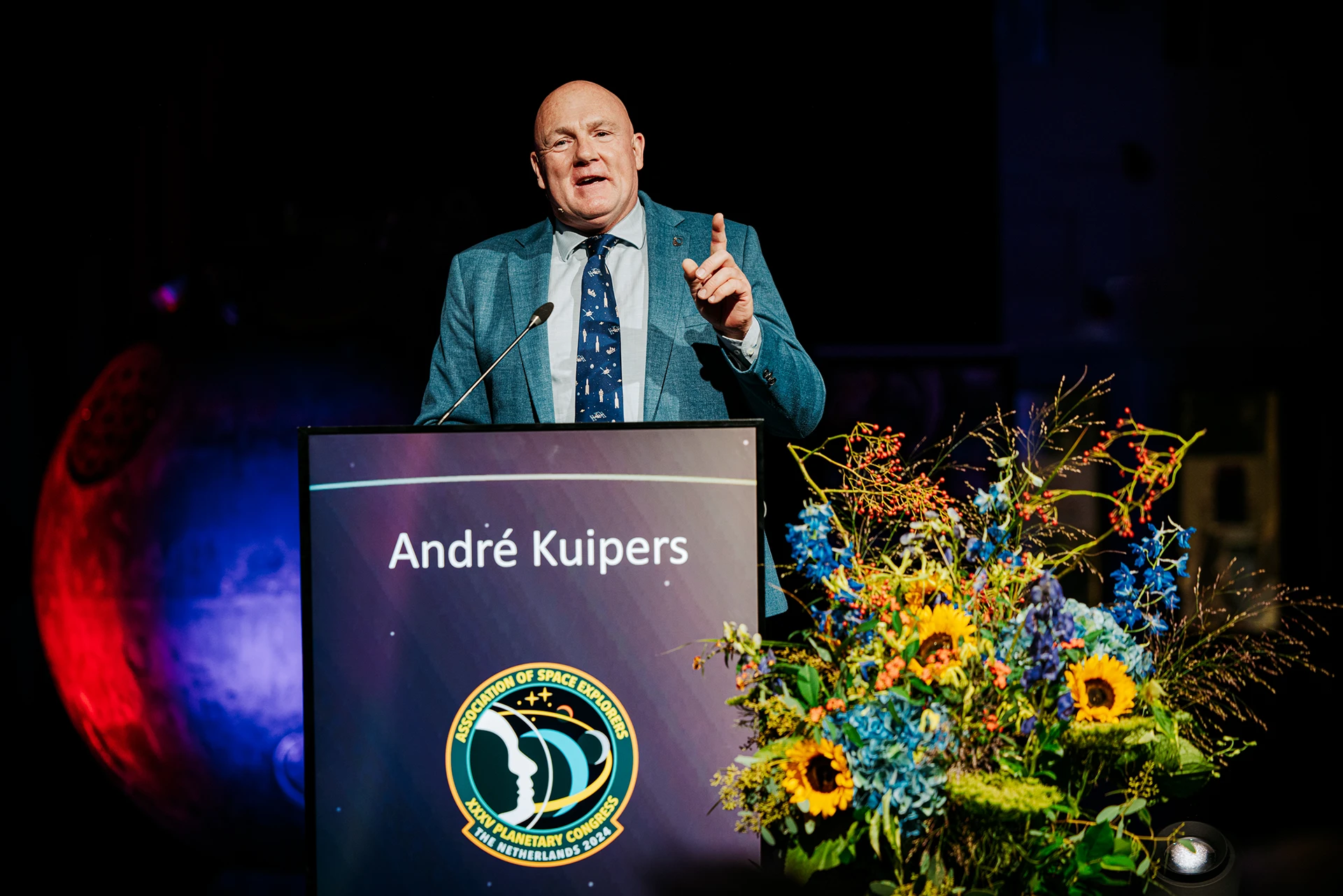
AVEX also has a long-standing partnership with ESA-ESTEC. Previous projects include audiovisual solutions for the Concurrent Design Facility (CDF) Centre, where international experts collaborate on future space missions.
How do you plan the audiovisual technology for a conference?
Good preparation helps prevent technical issues during your conference. These four steps will help you align the programme, venue and audiovisual requirements before the event.
Identify the programme and technical requirements
Develop a suitable audiovisual concept
Align technical production with the programme
Arrange professional technical support
What are the benefits of professional audiovisual support for conferences?
When video, audio, creative content and stage design work together, speakers can communicate their message effectively and attendees can follow the programme comfortably.
At the ASE Planetary Congress, the large LED screen, lighting, stage design and technical production complemented one another. This gave astronauts and international experts a professional setting in which to share their knowledge and experiences.
Ultimately, it’s not about how much technology you use, but what that technology makes possible. A well-planned audiovisual production helps keep the focus on the content of your conference.
Create a memorable conference experience
A successful conference requires more than reliable technology. By bringing together audiovisual technology, creative content and stage design from the outset, you can help speakers communicate their stories effectively and keep attendees engaged.
AVEX can help you bring these elements together. Want to explore the audiovisual possibilities for your next conference?

Dave Schardijn
Account Manager

Publication date
29 October 2026
Updated date
29 October 2026
Sector
Government
Solution
Events, LED walls
Veelgestelde vragen
What AV technology can AVEX provide for a conference?
Can you support multiple conference rooms at the same time?
Can you deliver a hybrid conference?
Can you manage presentations from multiple speakers?
Can you record or livestream a conference?
Do you also work at external conference venues?
Can you also provide technical production during the conference?
Blijf ontdekken