
Display vs LED vs projection: which should you choose?
A large professional display, a video wall, an LED wall or projection? If you’re looking to equip a meeting room, auditorium, entrance area, control room or another professional space with display technology, you’ll quickly face this choice. So, when should you choose a display, and when is an LED wall or projection the better solution?
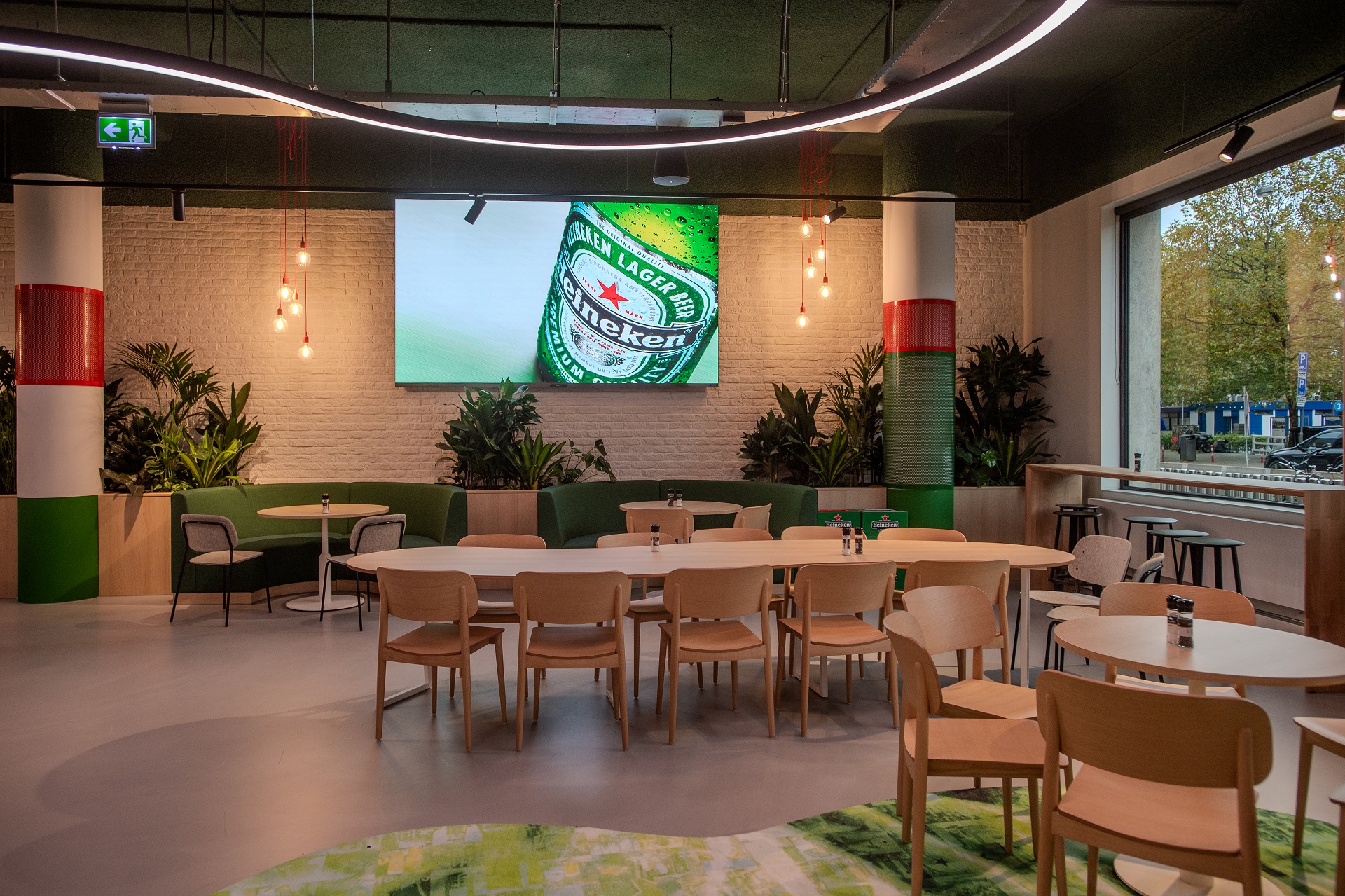
Choosing between a display, video wall, LED wall and projection isn’t just about size or image quality. What needs to be visible on the screen? From what distance? How much ambient light is there? How intensively will the installation be used? And what do energy consumption, lifespan and maintenance mean in the longer term?
In this article, we compare displays, video walls, LED walls and projection and explain when each display solution makes sense. This will help you determine which technology best suits your space, application and users.
Display, video wall, LED and projection: what’s the difference?
All four ultimately have the same purpose: to make content clearly visible. The way the image is created, however, differs.
- A professional display is a fixed screen, usually based on LCD technology. Displays are available in a wide range of sizes and configurations and are commonly used in meeting rooms, boardrooms, digital signage and smaller presentation spaces.
- A video wall consists of multiple professional displays that together form one larger display surface. Content can be shown across the entire video wall, or the display area can be divided between different information sources. Narrow bezels remain visible between the individual displays.
- With an LED wall (Direct View LED), the image consists of individual LED pixels that produce their own light. Multiple LED modules are combined to create one large, virtually seamless display surface. This allows an LED wall to be built in a wide range of sizes and aspect ratios.
- With projection, a projector projects the image onto a projection screen or another suitable surface. This makes it possible to create very large images without the entire display surface itself consisting of electronic display technology.
Which technology is best? That isn’t purely a technical question. It starts with what you want the space to achieve.
What is the difference between a display, video wall, LED wall and projection?
| Professional display | Video wall | LED wall | Projection | |
| Image size | Limited to available screen sizes | Multiple displays create a larger display surface | Modular and highly flexible | Large image sizes possible |
| Brightness | Good, depending on display type | Good, depending on the displays used | High brightness possible | Depends on projector, screen and environment |
| Ambient light | Well suited to bright spaces | Well suited to bright spaces | Strong performance in environments with high ambient light | Lighting conditions require additional consideration |
| Viewing distance | Depends on size and content | Depends on configuration, size and content | Pixel pitch is an important factor | Large image sizes accommodate greater viewing distances |
| Size flexibility | More limited | Flexible through combining displays | Very high | High |
| Visible seams | None | Bezels between displays | Virtually seamless | No visible seams |
| Installation space | Relatively compact | Space required for multiple displays, structure and technology | Space required for structure and technology | Projection distance and an unobstructed light path required |
| Maintenance | Usually involves the complete display | Per display and dependent on structure and accessibility | Modular maintenance possible | Depends on projector and installation |
| Energy & lifespan | Depends on type and usage | Depends on number of displays, type and usage | Depends on surface area, brightness and usage | Depends on projector, light source and usage |
| Typical applications | Meeting rooms, boardrooms, digital signage | Control rooms and command centres | Entrances, auditoriums, experience centres, large presentation spaces | Auditoriums, education and large presentation spaces |
This table provides an initial guide, but deliberately doesn’t suggest that one technology is always ‘better’ in a particular area. Ultimately, performance and impact depend heavily on the chosen product, size, configuration and how the installation is used.
Don’t start with the technology – start with what people need to see
A common mistake is to choose a screen size or technology first and then determine whether it suits the space. It should really be the other way around. Start by establishing what users need to see and from which position. A presentation with large images and video places very different demands on a display surface than an Excel spreadsheet, technical drawing, camera feed or dashboard containing small figures. That’s why the dimensions of the room aren’t the only important consideration. The distance to the nearest and furthest viewer, the position of the display and the smallest detail that needs to remain readable all determine how large the image needs to be. A 98-inch display might therefore work perfectly in one space but be insufficient in another. Screen size alone doesn’t tell you what image size you actually need.
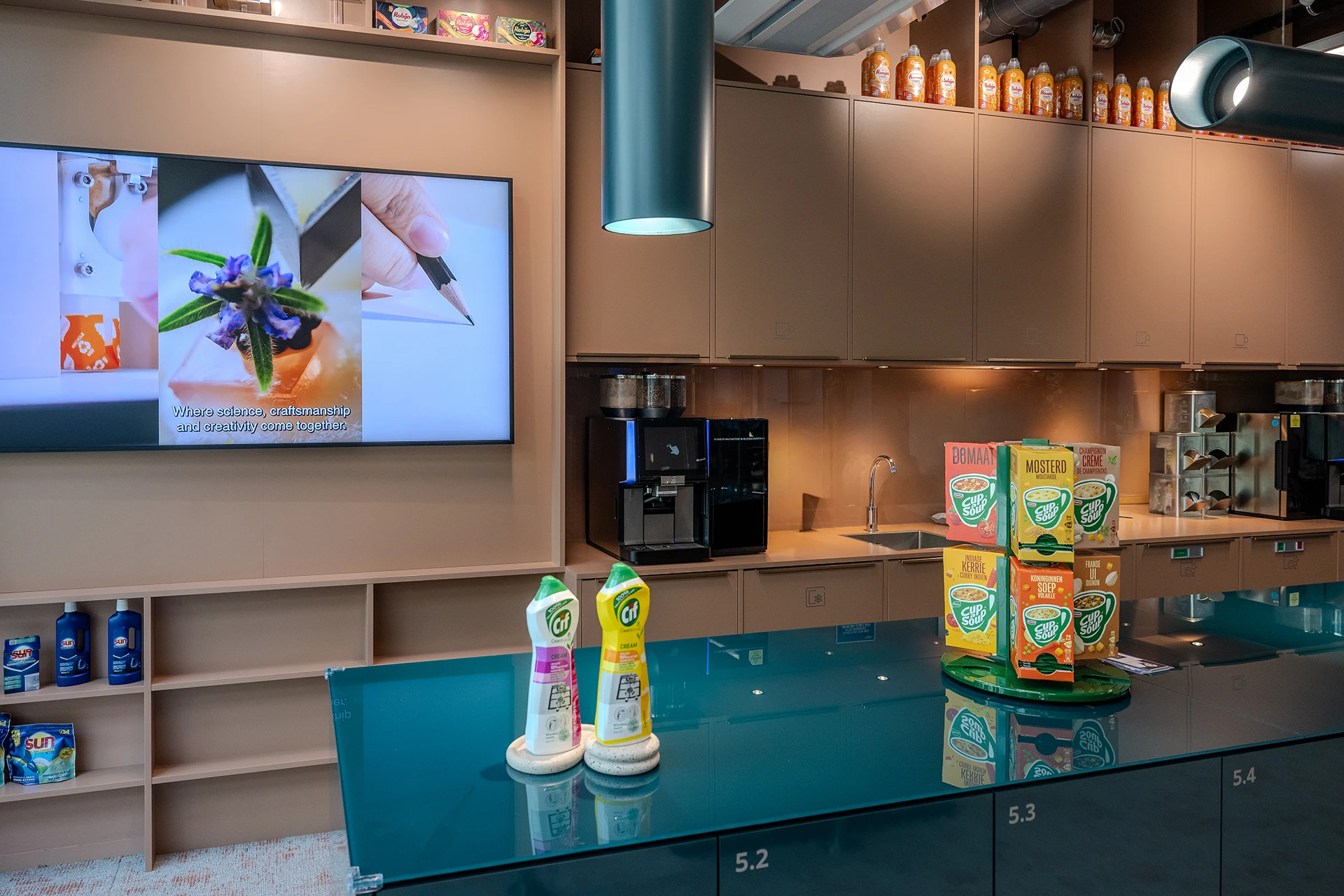
When should you choose a professional display?
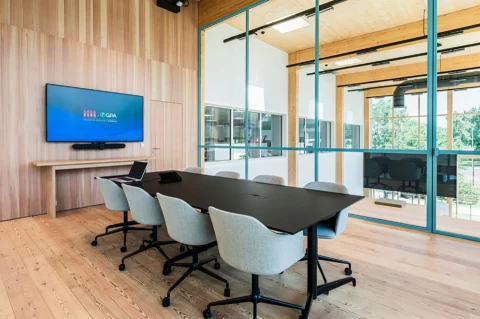
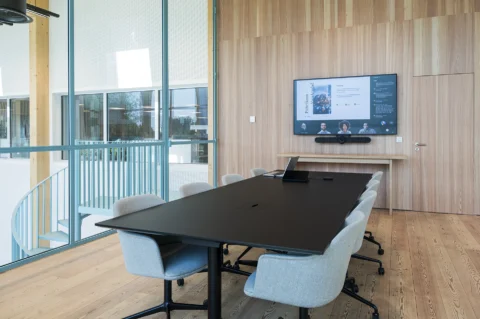
For many everyday business applications, a professional display is the most obvious solution. Think of a meeting room where colleagues share presentations and join video calls using Microsoft Teams Rooms. Or a boardroom, training room or digital information screen. One key advantage is the relatively simple setup. The display panel, electronics and light source are housed within a single unit, meaning the system requires relatively little space.
What size display do you need for a meeting room?
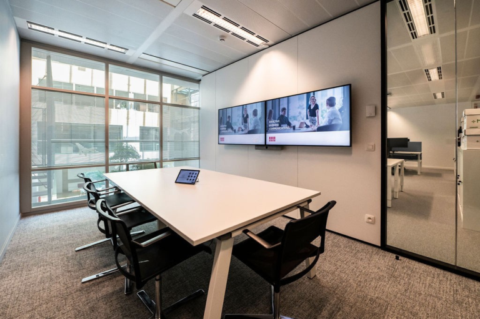
The right display size for a meeting room depends primarily on viewing distance, the space itself and the type of content being shown. The display needs to be immediately available when a meeting starts and must clearly show presentations, video calls and shared content. Depending on the space, a single display may be sufficient. In other rooms, two displays side by side may be more practical, allowing participants and shared content to remain visible at the same time. The right size shouldn’t be determined solely by the dimensions of the wall. Viewing distance and content are just as important.
When does a display become less suitable?
As the required display area becomes larger, another technology may become more attractive. That doesn’t mean there is a specific screen size above which you should automatically choose a video wall, LED or projection. The real question is whether the available display size still meets the requirements of the space. Can someone at the back of the room still read small text? Are the sightlines good? Can the display physically be positioned in the right place? And is the image large enough for the content that will actually be used? If not, it becomes worth considering a video wall, LED or projection.
When should you choose a video wall?
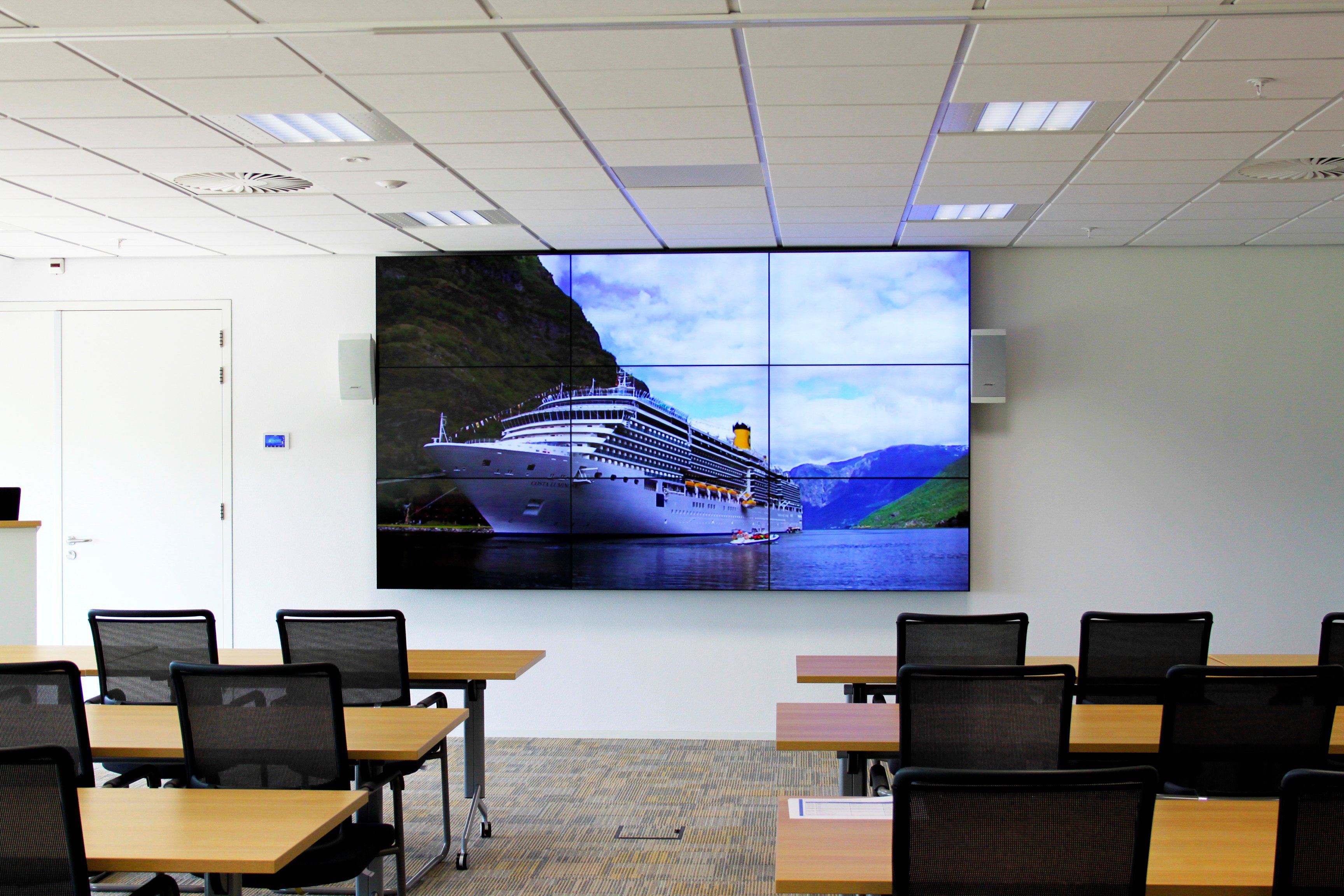
Sometimes a single display isn’t large enough, while one completely seamless display surface isn’t essential. In that case, a video wall can be a suitable solution. A video wall consists of multiple professional displays that together create a larger display surface. Displays can be positioned alongside and above one another, allowing for different configurations. Unlike an LED wall, the bezels between the individual displays remain visible. Whether that matters depends heavily on the application.
Displaying lots of information at the same time
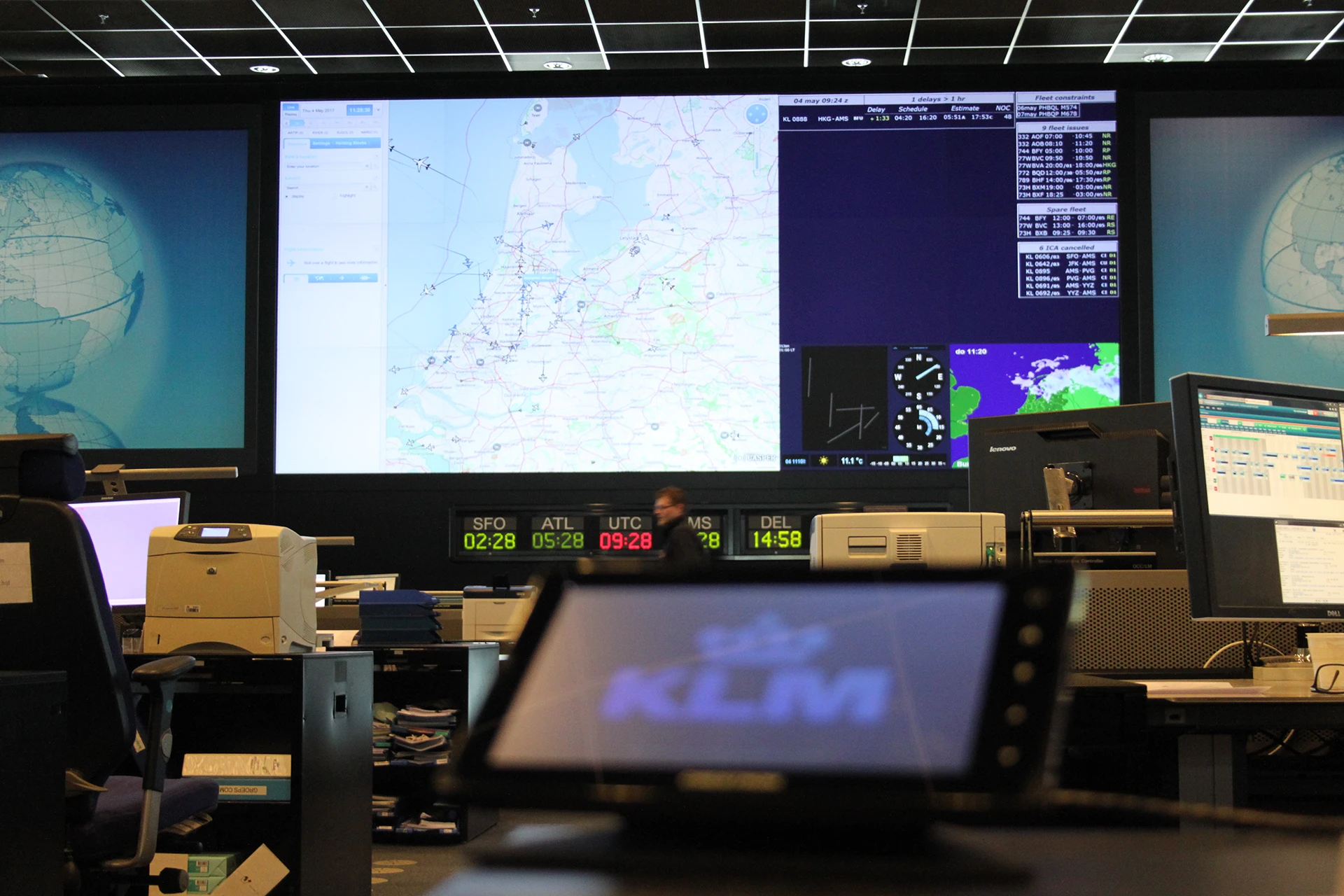
Video walls are widely used in control rooms. In these environments, it isn’t just about the size of the image, but primarily about giving operators the overview they need. Think of camera feeds, dashboards, maps, alerts and other information sources that need to be visible simultaneously. With the right control system, content can be displayed across the entire video wall, while different sources can also be positioned alongside one another. This makes a video wall particularly useful where overview, information distribution and continuous operation are important.
Outside control rooms, this technology can also be used in command centres, network operations environments and other spaces where multiple information sources need to be viewed centrally.
Video wall or LED wall?
A video wall and an LED wall can both be used to create a large display surface, but they do so in different ways. A video wall consists of individual displays. However narrow the bezels may be, seams remain visible between the panels. An LED wall is built from LED modules and therefore creates a virtually seamless display surface.
Video walls are a proven technology and are still widely used, for example in existing control rooms. For new installations, however, LED is increasingly becoming an attractive alternative. It offers greater freedom in terms of size and aspect ratio, eliminates distracting bezels and allows the display surface to be designed much more as a single visual canvas.
Particularly when a large display plays a prominent role in a space – such as an entrance, auditorium, experience centre or boardroom – LED is therefore becoming an increasingly logical choice. LED can also be an interesting option in control rooms where a large, continuous display surface is required.
That doesn’t mean an existing video wall should automatically be replaced, or that LED is always the best option. Investment, viewing distance, resolution, brightness, operating hours, maintenance and the way information is displayed all remain important factors. For a new installation, it therefore makes sense not to automatically choose a traditional video wall again, but to actively include LED in the comparison.
When should you choose an LED wall?
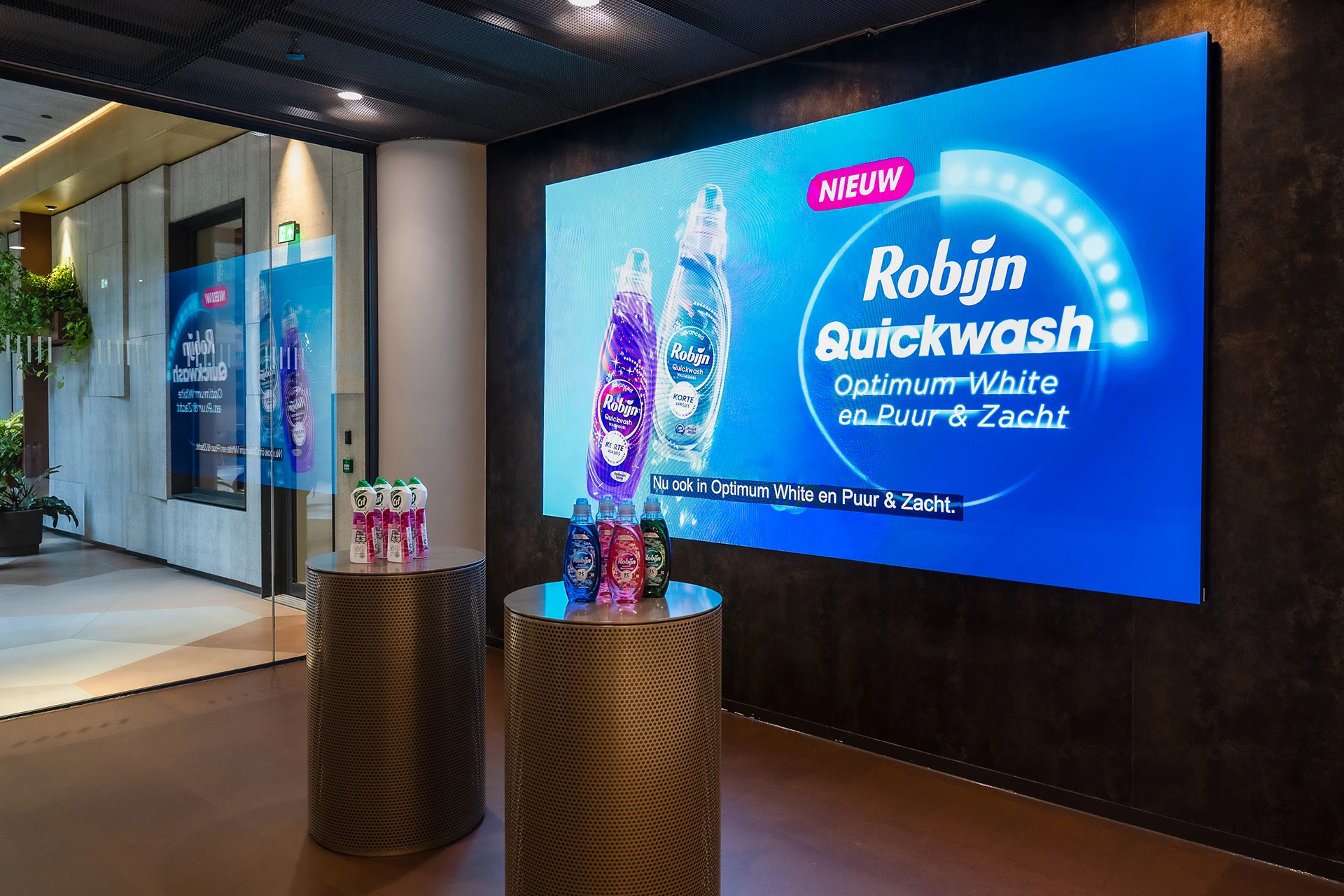
When a large display surface, high brightness or greater freedom in size becomes important, an LED wall comes into play. An LED wall consists of multiple modules that together form one continuous image. This means you’re far less restricted by standard screen sizes. A wide display wall in an entrance, a large visual canvas in an auditorium or a display surface integrated into the architecture are all possible. An LED wall therefore isn’t simply a larger version of a traditional display. It’s a display solution that can be specifically designed around the space.
What pixel pitch do you need for an LED wall?
The right pixel pitch for an LED wall depends primarily on viewing distance and the level of detail in the content.
When considering an LED wall, you’ll quickly come across the term pixel pitch. Pixel pitch is the distance between the centres of two adjacent LED pixels and is measured in millimetres. The smaller this distance, the closer together the pixels are. This enables a higher pixel density and can be important when people are relatively close to the display or need to view detailed content. If the audience is further away, a larger pixel pitch may be perfectly suitable.
Choosing the smallest possible pixel pitch isn’t automatically better. A finer pixel pitch affects, among other things, the amount of LED technology required and therefore the investment.
Again, the application determines the technology. Viewing distance, content, desired size and resolution all need to be considered together.
When should you choose projection?
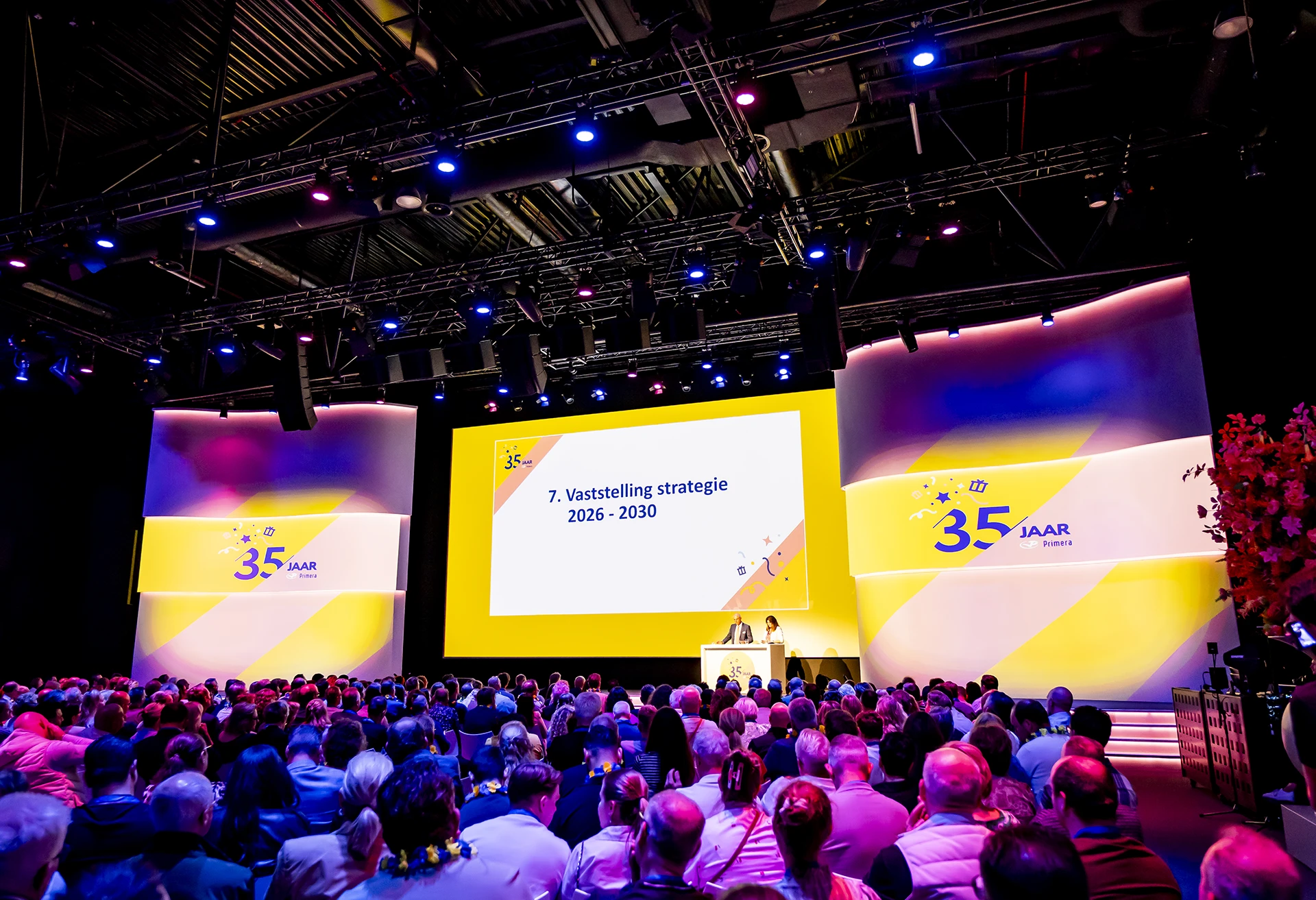
Projection can be an attractive option when a large image is required and the space is suitable for projecting it. Unlike a display, video wall or LED wall, the display technology itself isn’t located within the display surface. The projector creates the image and projects it onto a separate screen or surface. This makes it possible to create very large images without installing a completely electronic display surface on the wall. Projection can therefore be particularly suitable for auditoriums, lecture theatres, large presentation spaces and conference centres.
When should you choose a projector instead of an LED wall?
Projection has one fundamental difference compared with a display, video wall or LED wall: the projected light first needs to reach the projection surface and then be perceived by the viewer.
As a result, conditions within the room have a significant impact on the final result. Ambient light is an important example. How much daylight enters the room? What lighting is used during presentations? Can that lighting be controlled? And how much contrast is required for the content to remain clearly visible? The projection surface itself also plays a role. You also need to consider the position of the projector, the required projection distance and an unobstructed light path between the projector and screen. Projection therefore isn’t simply a matter of choosing a projector with sufficient light output. The projector, projection screen and the room together form the display solution.
Projection can therefore be attractive when a very large image is required and lighting conditions can be effectively controlled. In bright spaces, or situations where a bright, permanent and seamless display is central to the experience, an LED wall may be more suitable.
What role does resolution play?
More pixels may automatically sound better, but again, the application determines what is actually required. The resolution of the source, the display system, the dimensions of the image, viewing distance and the type of content are all interconnected.
- With a traditional display, the physical resolution of the panel is fixed.
- With a video wall, the overall image is created using multiple displays. The chosen configuration, resolution of the individual displays and the way content is presented together determine how much detail can be shown.
- With an LED wall, the final resolution is partly determined by the size of the LED wall and the chosen pixel pitch.
- With projection, resolution is primarily determined by the chosen projector and the way the content is displayed.
The goal isn’t simply to install as many pixels as possible. The goal is to provide enough detail for what users actually need to see.
Energy consumption, lifespan and maintenance
A permanent AV installation is often used for many years. That’s why the comparison shouldn’t stop at purchase price and image quality.
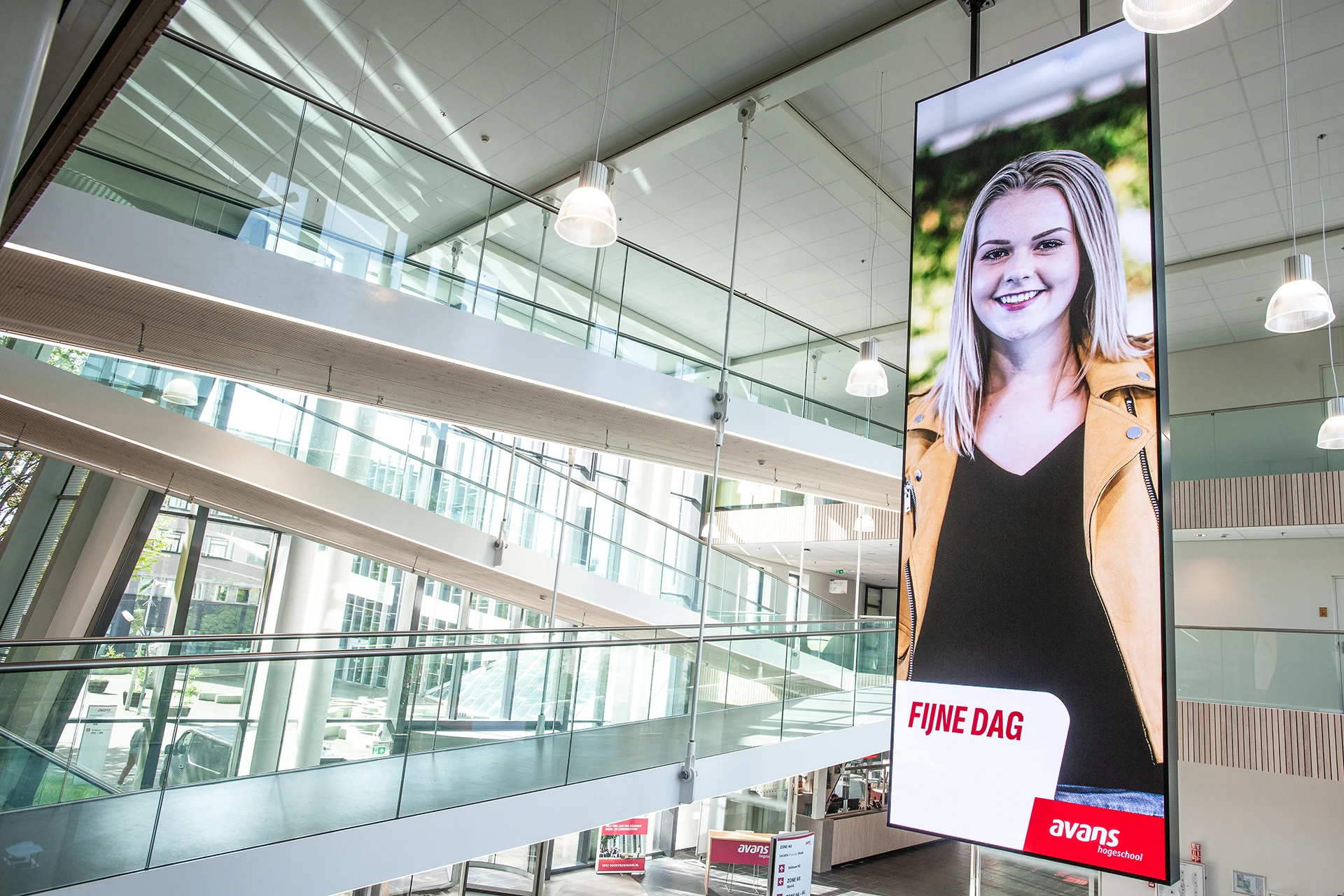
Energy consumption, expected lifespan, maintenance and replaceability also influence the final choice. None of the four solutions is automatically the most sustainable. The energy consumption of a display solution is influenced by factors including size, technology, brightness settings and the number of hours the system is used. A display in a meeting room that is active for a few hours each working day has a very different usage profile from a video wall in a control room or a large display wall in an entrance that operates almost continuously.
Lifespan is about more than operating hours
Published lifespan figures also require some context. Manufacturers may specify an expected lifespan or operating life for displays, video walls, LED technology and projectors, but these figures can’t necessarily be compared directly. The conditions in which equipment is used, brightness settings, operating hours, temperature and maintenance can all affect performance over its lifetime.
Warranty and service also play a role. For professional displays, the standard manufacturer’s warranty can, depending on the brand and model, sometimes be extended to five years. Particularly when a display solution is used intensively or is business-critical, a longer warranty period can be valuable. This means looking not only at the initial purchase of the screen, but also at the level of certainty and support available throughout the planned period of use.
So don’t focus on a single number on a datasheet. Consider expected performance, warranty, service and maintenance throughout the period in which you intend to use the installation.
Maintenance and replaceability matter too
With a professional display, a fault will generally involve working with or replacing the complete display unit.
A video wall consists of multiple displays. Accessibility to the individual screens and the structure behind them are therefore important considerations during the design stage.
An LED wall is modular, meaning individual parts of the system can be accessible and replaceable. This makes serviceability an important part of the design. Can the LED wall, for example, be maintained from the front, and does the technology remain easily accessible?
With projection, the accessibility of the projector and the maintenance requirements of the chosen system need to be considered.
This may seem like a small detail at the point of purchase, but it becomes much more important when the installation is expected to remain in use for many years.
Which display solution is most cost-effective over its total lifespan?
The cheapest solution at the point of purchase isn’t necessarily the most cost-effective over its entire period of use. Equally, the most technically advanced solution isn’t automatically the best investment. That’s why it makes sense to look at the complete picture when considering a permanent display installation:
- purchase and installation;
- energy consumption during operation;
- expected operating life;
- maintenance and service;
- replaceability of components;
- required infrastructure;
- and whether the solution will continue to suit how the space is used in the future.
This provides a much more realistic picture of the total investment.
Display, video wall, LED or projection: what’s the best choice?
There is no single winner. For a meeting room, a professional display may provide exactly what is needed. In a control room where multiple information sources need to remain visible continuously, a video wall may be the right solution. In a large auditorium, a traditional display may not provide enough image area, making LED and projection more attractive. In a bright entrance where a large image needs to remain a permanent part of the environment, an LED wall may offer different advantages.
The best display technology therefore isn’t the one with the most impressive specifications. It’s the one that best matches the space, the content, the users and the expected period of use.
Which display solution do you need? Start with these questions
You don’t need to know in advance whether you need a display, video wall, LED wall or projector.
Instead, start with these questions:
- What needs to be visible?
Will you mainly be showing video and large visuals, or do small text, figures, camera feeds and details need to remain clearly readable? - Who needs to see it?
Don’t just consider the person sitting closest to the display. The furthest viewer is just as important. - How will the space be used?
A meeting room, control room, auditorium, entrance and experience centre all have different requirements. - Do multiple information sources need to be visible at the same time?
In a control room, for example, operators may need to monitor different camera feeds, dashboards, maps and alerts simultaneously. - How much ambient light is there?
Daylight and artificial lighting affect the required display performance. - How intensively will the installation be used?
A few hours a day or almost continuous operation makes a difference to energy consumption and lifespan. - How long does the solution need to last?
Look beyond the initial purchase and consider maintenance, energy consumption and replaceability. - Could the way the space is used change?
A display solution shouldn’t only work today. Consider how the space may be used over the coming years.
With this information, it becomes much easier to determine which technology and image size are actually required.
You don’t need to choose the technology yourself
Perhaps that’s the most important message. You don’t need to know in advance how many inches you need, how many displays a video wall should contain, which pixel pitch is suitable or how much light output a projector should provide. What you do need to know is what you want to achieve with the space. AVEX then translates the intended use, space, viewing distances, content and technical requirements into a suitable display solution. We don’t just consider performance on the day of installation, but also management, day-to-day use and the longer term.
That way, you’re not simply choosing a display, video wall, LED wall or projection. You’re choosing a visual solution that works for the people who use it every day.
Which display solution is right for your space?
Choosing a display, LED wall or projection solution isn’t just about specifications. We consider the space, viewing distance, content, how the system will be used and your longer-term requirements. Together, we’ll find a display solution that truly fits.

Jeroen Labots
Portfolio Manager

Publication date
12 October 2026
Updated date
19 October 2026
Sector
All Sectors
Solution
Auditoriums, Boardrooms, Command Centres, Conference Centres, Control Rooms, Council Chambers, Digital Signage, LED walls, Meeting Rooms
Keep exploring
More insights on Meeting Rooms

A great idea starts here
Whether you’re looking to upgrade, expand or optimise, we’ll help you find an audiovisual solution that fits your organisation.