Buying AV equipment online or choosing a professional AV partner?
You want to equip a meeting room with a display. Add a microphone to a boardroom. Or set up an auditorium for presentations and hybrid meetings. When you then search online for equipment, the comparison can seem straightforward: the same display, camera or speaker is often readily available to buy online.
So why choose a professional AV partner when you can simply buy AV equipment yourself?
Because in a professional environment, you are usually investing in more than just equipment. You are investing in a solution that is easy to use, where different technologies work together and that you can rely on when it matters.
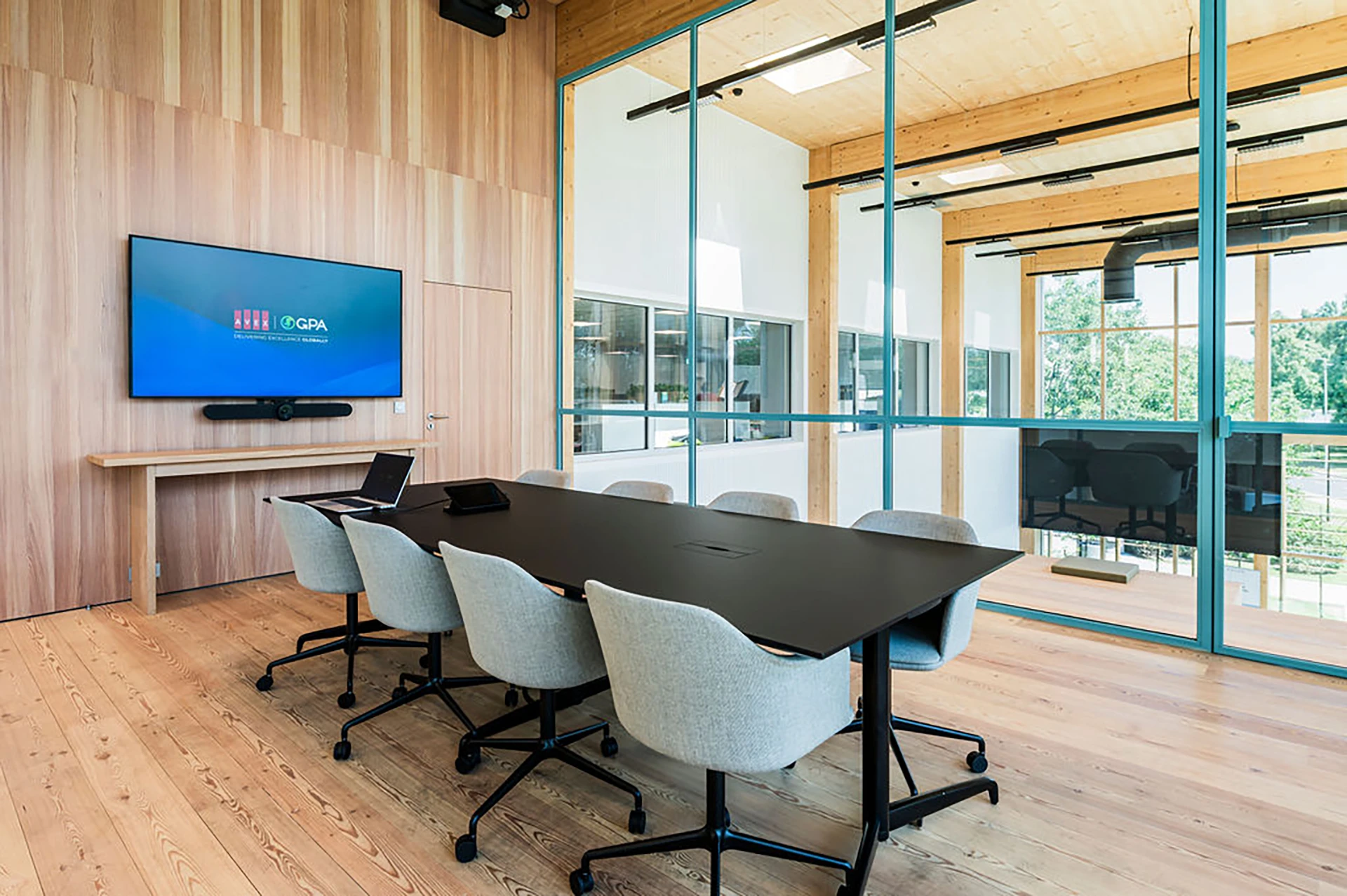
Buying AV equipment or investing in a complete AV solution?
Online retailers are a perfectly good choice if you know exactly what you need and can take responsibility for installation, configuration, management and support yourself.
Within organisations, however, the challenge often lies elsewhere. The display itself is rarely the problem. What you really want is for employees to walk into a room and start immediately, for audio and video to work seamlessly together, and for a hybrid meeting not to depend on someone who happens to know which cable or setting is needed.
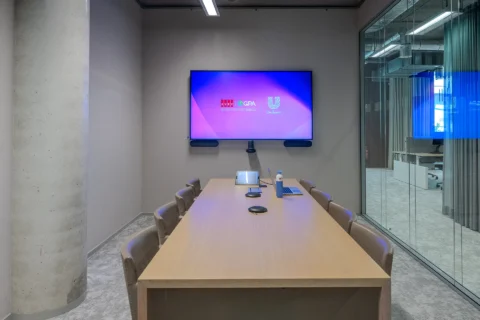
A professional meeting room solution therefore brings together video, audio, videoconferencing, control and management. The focus is not on the individual devices, but on the experience of the people who use the room every day.
The price difference is about more than the equipment
When buying online, you can immediately see how much a display, camera or speaker costs. With a professional AV installation, you are also paying for less visible elements: consultancy, design, engineering, configuration, installation, testing, documentation, management and support.
That makes it difficult to compare solutions based solely on the initial purchase price. The true cost of an AV solution is determined across its entire lifecycle.
Think, for example, of meetings starting late because of connection issues, IT colleagues regularly having to resolve faults, or employees avoiding certain meeting rooms because they are complicated to use. The equipment itself may technically work perfectly well, while the overall user experience remains poor.
So the question is not simply: “How much does the equipment cost?”
A better question is: what do we need to make this room work reliably and intuitively every day?
Why individual AV products do not automatically create a good AV solution
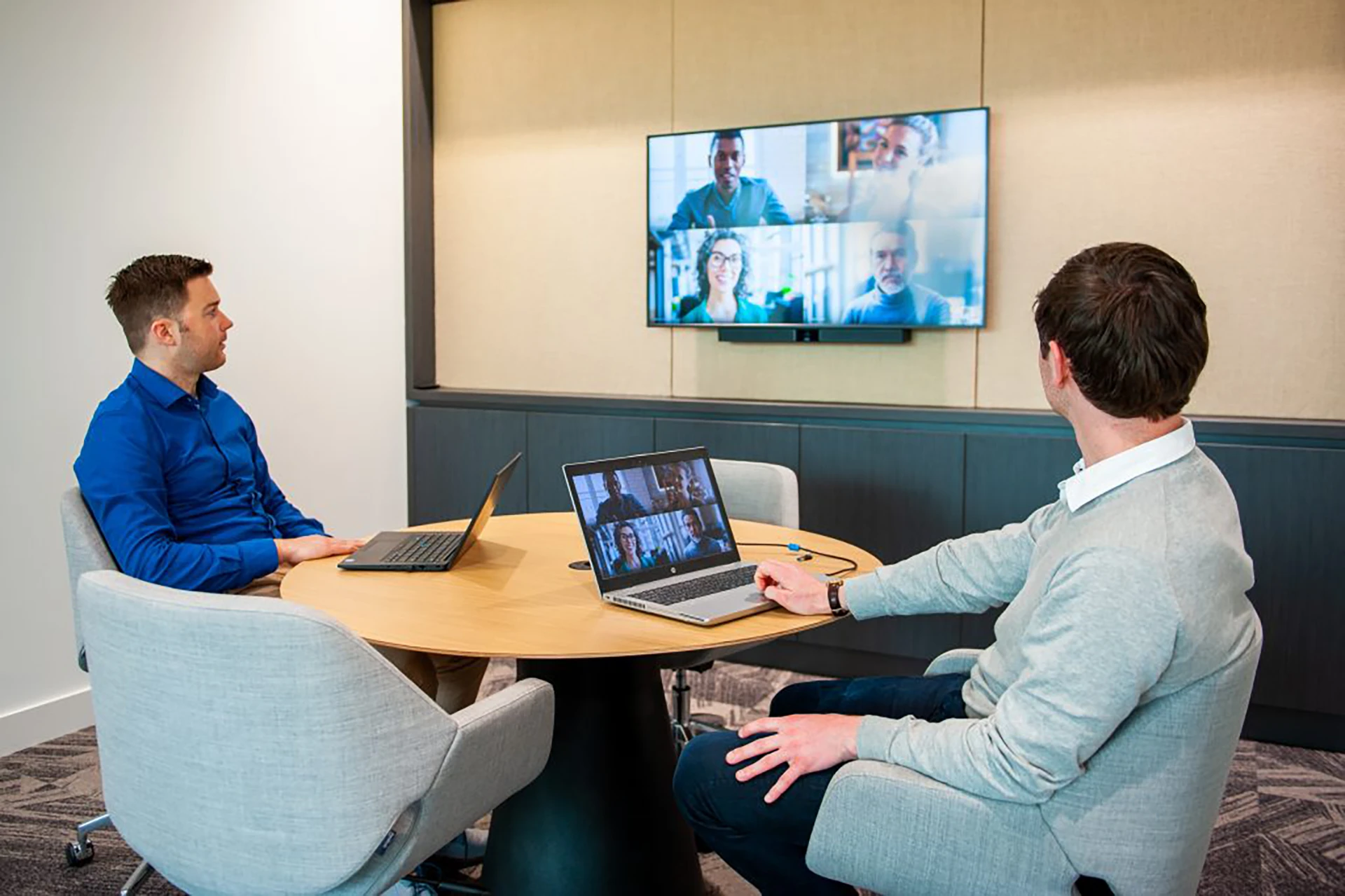
A camera can deliver excellent image quality. A professional display can be impressively sharp. And a microphone can make voices perfectly clear. But great individual products do not automatically create a great meeting room.
The challenge lies in how all those components work together. Does Microsoft Teams work as expected? Are the camera, microphones and speakers properly configured to work together? Are the controls intuitive? What happens after a software update? And does the solution also work for someone who has never used the room before?
That is an important difference between selecting equipment and designing an AV solution.
A professional AV partner first considers the room, its users and its purpose. How large is the room? How many people use it? What are its acoustic characteristics? Which meeting platforms does the organisation use? How should the environment be managed? Only then is the right technology selected.
For standard meeting rooms, standardisation can offer significant benefits. With BRIX, for example, AVEX uses proven configurations for small, medium and large meeting rooms. This means every room does not have to be designed from scratch.
A good AV solution often comes down to details you may not immediately consider
Designing a professional AV solution starts with the bigger picture, but ultimately comes down to the smallest details. This is where much of the engineering lies – work you may not see at first, but certainly experience in everyday use.
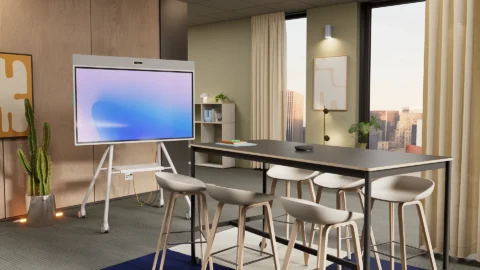
We consider, for example, the dimensions and layout of a room, the number of users and how people need to collaborate. But we also look at sightlines, acoustics, natural light and the position of windows and glass walls.
Does a meeting room contain a lot of glass? Even the position of the sun throughout the day can influence the choice and positioning of a display. Is a room with glass walls next to a busy corridor? Then the design and configuration can take this into account, so the camera does not continuously detect and frame colleagues walking past.
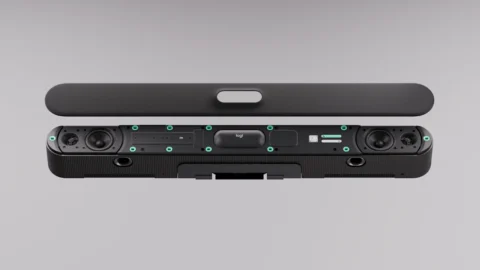
The position of microphones and speakers, viewing distances, camera angles, cabling, controls and future expansion are also taken into consideration. Sometimes it comes down to centimetres or settings that the user will never see.
And that is exactly the point. When all these decisions have been made correctly in advance and properly engineered, the user no longer has to think about them. They simply walk into the room and expect everything to work.
What does a professional AV partner do?
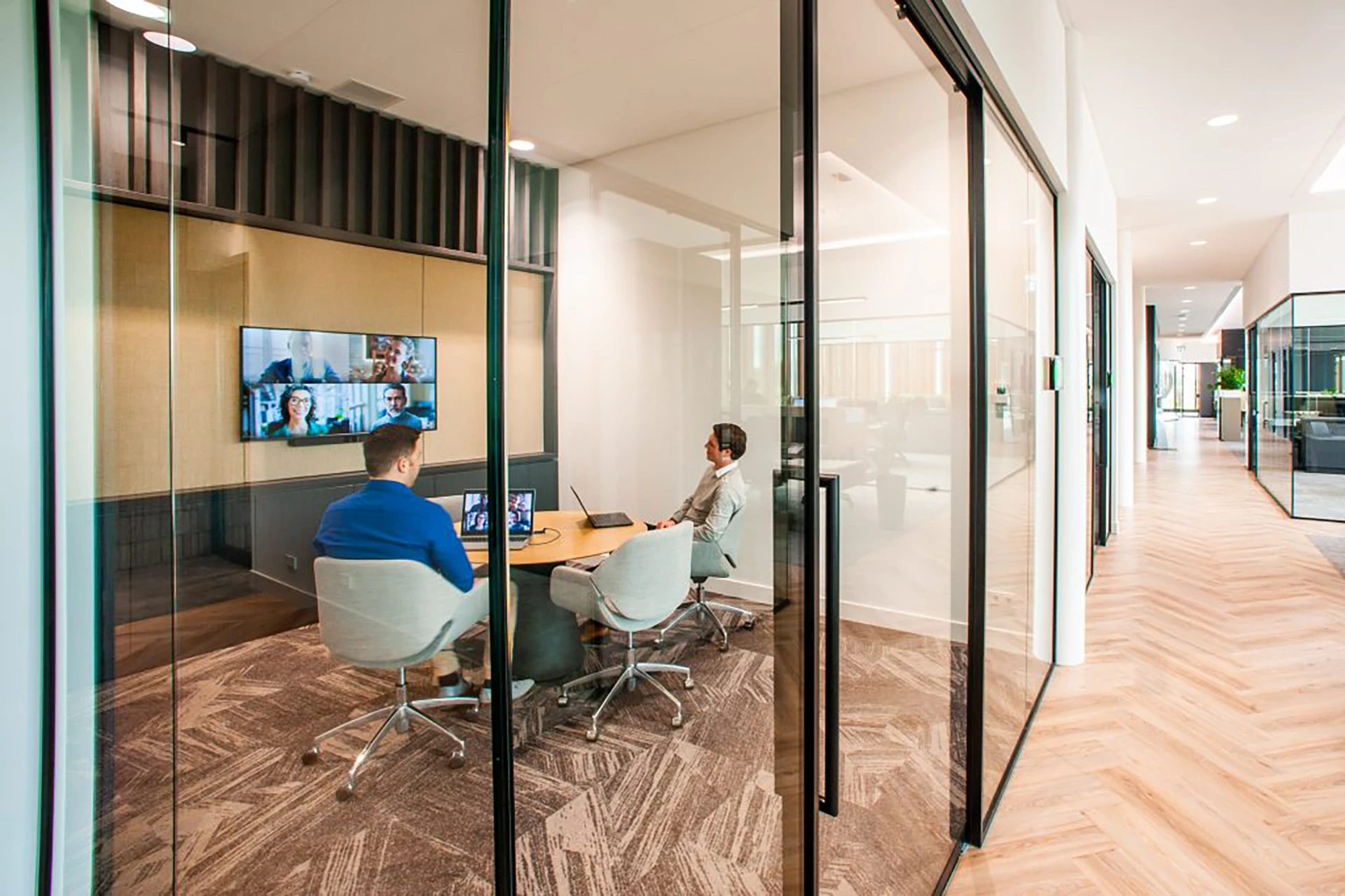
Ideally, the role of an AV partner does not begin with delivering a box and end once the display has been mounted on the wall. A professional AV integrator brings technology, space and user needs together in one complete working environment.
Depending on the project, this may include:
- assessing the room, users and requirements;
- advising on the right audiovisual solution;
- technical design and engineering;
- selecting and integrating suitable hardware and software;
- installation and configuration;
- testing and commissioning the complete environment;
- management, maintenance and support throughout its lifecycle.
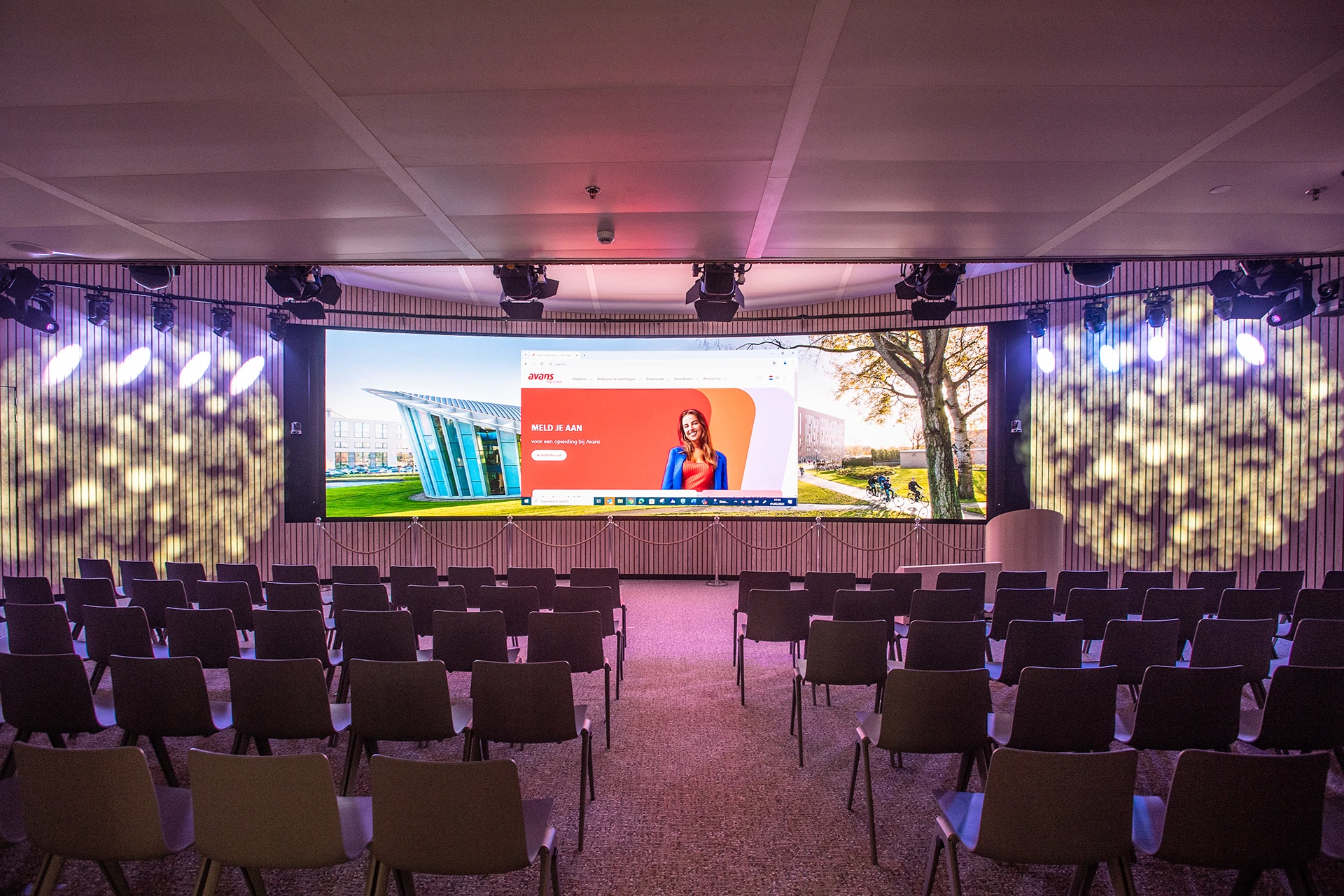
For a boardroom, auditorium or other business-critical space, this integration becomes even more important. It is not just about achieving good video and audio; controls, interior design, acoustics, videoconferencing and reliability all need to be designed as one cohesive solution.
One point of contact for the complete AV solution
Imagine buying different components separately. The display comes from one manufacturer, the camera from another and the audio solution from a third. As soon as the combination does not work as expected, it can be difficult to determine exactly where the problem lies.
With one AV partner responsible for design, integration, installation and support, that responsibility is much clearer. You have one point of contact that understands the complete solution, rather than just one component.
This becomes particularly important when audiovisual technology is part of your day-to-day operations. The more rooms, users, locations and systems you manage, the greater the value of standardisation, documentation and structured support.
A professional AV installation looks beyond today
Audiovisual technology continues to evolve. Meeting platforms gain new functionality, hardware reaches the end of its supported lifecycle, and developments in AI, management and security change the requirements for professional meeting spaces.
That is why, when planning a new AV installation, it makes sense to look beyond what works today. How scalable is the solution? Can the same standard later be rolled out to other rooms or locations? Which components can be replaced or expanded? And how will the environment be managed throughout its lifecycle?
For organisations with multiple meeting rooms, a standardised approach can also prevent a patchwork of different configurations from developing over time. This makes both the user experience and ongoing management more predictable.
Think of it like a kitchen
You can order an oven, fridge, hob and extractor fan separately online. Each appliance may be excellent in its own right. But ultimately, you do not want a collection of great appliances. You want a kitchen where everything fits, is properly connected and works well together.
Professional audiovisual technology works in much the same way. The quality of the individual equipment matters, but ultimately it is how everything works together that determines whether the room functions effectively.
When can you simply buy AV equipment online yourself?
Not every AV requirement needs a professional AV integrator. For simple applications, buying equipment yourself can be a logical and cost-effective choice.
For example, when:
- you only need a standalone display, webcam or accessory;
- you are setting up a simple home workspace or presentation setup;
- installation and configuration can easily be handled internally;
- management and support are already covered within your organisation;
- the impact is limited if the equipment is temporarily unavailable.
But as soon as multiple systems need to work together, rooms need to operate consistently or communication becomes business-critical, the considerations change. It becomes less about the individual product and more about reliability, ease of use, management and continuity.
When do you need a professional AV partner?
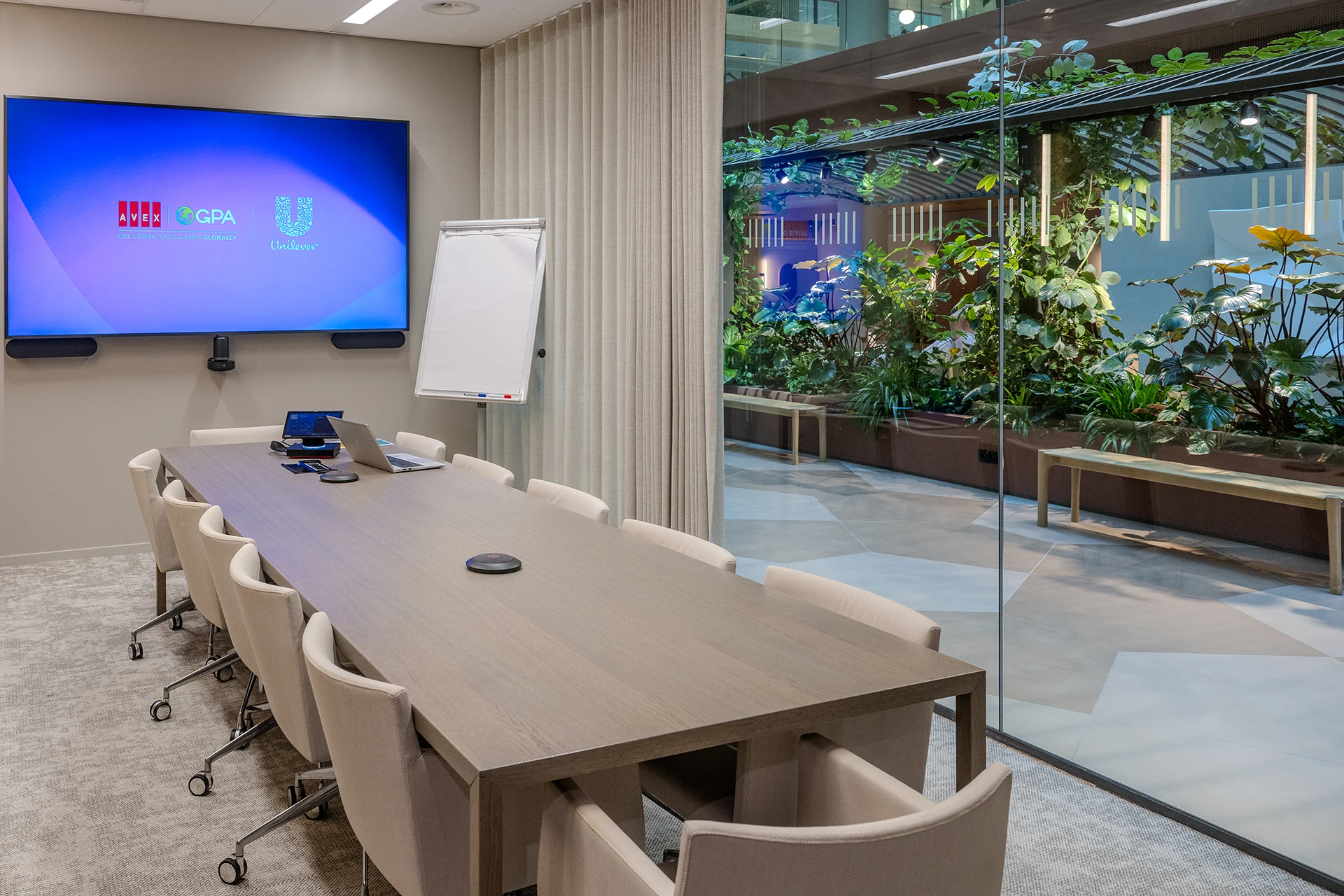
An AV partner becomes particularly valuable when technology is a structural part of how your organisation communicates and collaborates. Think multiple meeting rooms, Microsoft Teams Rooms, boardrooms, auditoriums, hybrid meetings or environments that need to be standardised across multiple locations.
When ease of use, management, security or business continuity are important, it also makes sense to look beyond the initial purchase price of the equipment.
Curious to see what this looks like in practice? Explore our success stories and discover how different organisations use audiovisual technology to meet, present, communicate and collaborate.
Focus on your message, not the technology
An important presentation, board meeting or hybrid meeting is not the moment when you want to be thinking about cables, settings or equipment that is not doing what you expect. Your attention should be on the conversation, the participants and the purpose of the meeting.
That is ultimately where a professional AV partner adds value: designing, integrating and supporting technology so that it requires as little attention as possible.
Because a good AV solution does not stand out because there is a lot of technology in the room. It stands out because communicating and collaborating feels effortless.

Jeroen Labots
Portfolio Manager

Publication date
18 October 2026
Updated date
19 October 2026
Sector
All Sectors
Solution
Auditoriums, Boardrooms, Meeting Rooms
Keep exploring