
Sustainability & ESG
Circular Economy
Circular AV
Customers Using Circular AV Solutions
BRIX zero represents AVEX’s first step in the transition from linear to circular audiovisual solutions. The concept encourages collaboration with partners and customers to design, use and reuse AV equipment more sustainably, while AVEX remains responsible for the equipment throughout its lifecycle.
Through take-back, refurbishment and reuse, we extend the lifespan of equipment, reduce waste and make more efficient use of resources. In this way, BRIX zero contributes to responsible consumption, sustainable innovation and reduced CO₂ emissions, while laying the foundations for a more circular AV industry.
In 2025, two launch customers adopted BRIX zero. In 2026, we expect to contract a further eight customers for BRIX zero. This expectation is based on the level of market interest in these circular solutions following the launch.
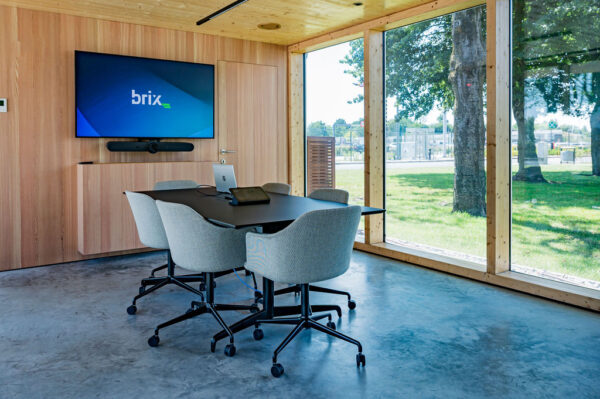
Discover Our Circular AV Solution: BRIX zero
Want to reduce the CO₂ impact of your audiovisual environment? With BRIX zero, you choose circular AV solutions that contribute to your sustainability objectives without compromising on quality, performance or ease of use.
Discover BRIX zero
Reuse
IT Recycling Partner
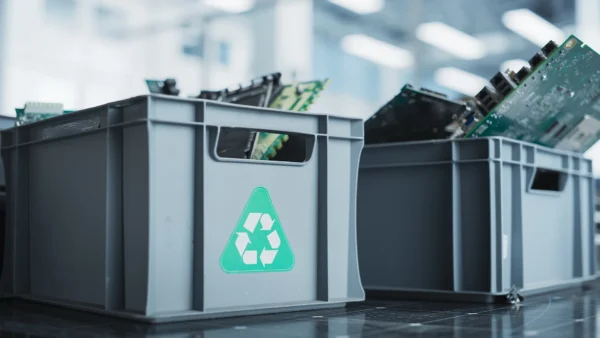
Where possible, AV equipment that is no longer used within AVEX is given a second life. Together with IT Recycling, we ensure that suitable equipment is reused or resold where there is demand. Equipment that can no longer be reused can be responsibly processed and recycled.
Visit the IT Recycling websiteOpens in new tab:

E-Waste Recycling
Circular Economy
Because our customer projects involve the procurement of hardware and technical components, a circular economy and responsible waste management are essential. We actively promote circularity through reuse, extending product lifespans and future-ready design. This helps us reduce the need for new materials and minimise waste streams.
This approach reduces the use of primary raw materials and improves the efficiency of our projects. We also focus on the management and responsible disposal of electronic equipment and packaging materials to further minimise waste. In this section, we look back at the progress achieved.

AVEX reduces the impact of e-waste by focusing on e-waste intensity and high-quality processing through reuse, refurbishment and certified recycling. Our baseline e-waste intensity is 0.91 kg per €1,000 of procurement value in 2025.
AVEX aims to reduce e-waste intensity by at least 25% by 2030, resulting in a target of no more than 0.68 kg of e-waste per €1,000 of procurement value. This target takes into account business growth, technological developments and the project-based nature of our activities.
In 2025, AVEX generated approximately 21.9 tonnes of e-waste, primarily consisting of displays, cabling, UPS components and other electronic equipment.
As e-waste volumes are closely linked to project-based replacements, technological developments and the scale of our operations, AVEX does not manage performance based on absolute e-waste volumes. Instead, we use e-waste intensity as our primary metric, allowing performance to be compared consistently over time regardless of business growth or fluctuations in project volume.

| E-waste 2025 | Quantity (kg) |
| Displays | 19.430 |
| Cables & wiring | 1.535 |
| UPS components | 450 |
| Server & computer cabinets | 230 |
| Batteries | 72 |
| Total e-waste | 21.931 |
In addition to intensity, AVEX focuses on the quality of e-waste processing. Wherever possible, discarded equipment is reused or refurbished. Remaining e-waste is handled by certified processors for high-quality recycling.
Emissions associated with business waste are reported in accordance with the GHG Protocol (Scope 3, Category 5). Avoided emissions resulting from recycling or energy recovery are not included in our CO₂ footprint.
Reducing Waste
AVEX reduces the environmental impact of non-electronic business waste by focusing on waste intensity and reducing packaging materials throughout the value chain. In 2025, waste intensity was 3.78 kg per €1,000 of procurement value, an improvement compared with 2024 (4.34 kg per €1,000). This represents a reduction of approximately 13% year on year.

AVEX aims to reduce waste intensity by 25% by 2030, measured against the 2024 baseline. This results in a target of no more than 2.84 kg of waste per €1,000 of procurement value. By measuring intensity rather than absolute volumes, we can assess performance consistently regardless of growth in procurement or project activity.
To reduce waste structurally, AVEX focuses on value chain improvements and redesigning procurement requirements. We actively work with suppliers to reduce packaging materials, particularly cardboard and single-use plastics. This includes setting requirements for reusable transport packaging, bulk deliveries and return logistics for packaging materials.
Our sourcing and contractual arrangements also increasingly require suppliers to provide insight into their packaging intensity and waste streams, making sustainability a consistent and measurable part of supplier selection and evaluation.
By far the largest proportion of our waste consists of packaging materials associated with purchased goods, particularly residual waste (31,874 kg) and paper and cardboard (27,652 kg). The volume of these waste streams is closely linked to procurement volumes and logistics choices throughout the value chain. Waste intensity is therefore the primary performance metric within AVEX’s waste management policy.
| Waste stream 2025 | Quantity (kg) |
| Residual waste | 31.874 |
| Paper & cardboard | 27.652 |
| Plastic packaging (EPS + PD) | 4.770 |
| Wood (Grade A) | 3.940 |
| Other business waste streams | 21.510 |
| Totaal bedrijfsafval | 90.746 |
In addition, AVEX is optimising procurement volumes and consolidating deliveries to reduce unnecessary logistics packaging and transport-related waste. Wherever possible, we work with preferred suppliers, consolidated orders and just-in-time deliveries to reduce the number of individual deliveries and, consequently, the amount of packaging waste generated throughout the value chain.
Finally, AVEX is exploring how reusable materials and refurbished or circular alternatives can be structurally integrated into the procurement of project and operational goods. This allows waste prevention to begin before materials even enter our organisation.
Emissions associated with business waste are reported in accordance with the GHG Protocol (Scope 3, Category 5). Avoided emissions from recycling or energy recovery are not included in our CO₂ footprint, as these fall outside the applicable system boundaries of the protocol.

Want to know more about sustainability at AVEX?
We believe it is important to be transparent about our sustainability objectives, performance and approach. If you are a customer, partner, auditor or other stakeholder and have questions about our ESG policies, results or supporting documentation, please get in touch.