
Sustainability & ESG
Climate & Energy
CO₂ Emissions
Near-Term & Net-Zero Targets
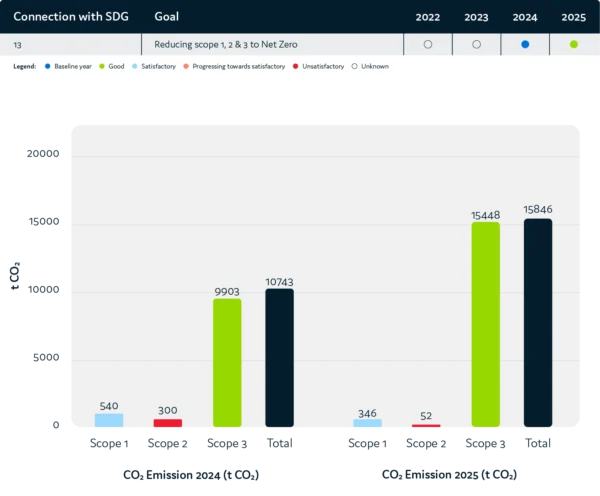
AVEX has had its CO₂ reduction targets for net zero by 2050 officially validated by the Science Based Targets initiative (SBTi), using 2024 as the base year. Our targets include a 95% reduction in Scope 1, 2 and 3 emissions by 2050 (net zero), as well as a near-term target to reduce Scope 1 and 2 emissions by 67% by 2035.
In 2025, we made significant progress. Compared with 2024, Scope 1 emissions fell from 540 to 346 tonnes CO₂e (−36%), while Scope 2 emissions (market-based) decreased from 300 to 52 tonnes CO₂e (−83%). Scope 3 emissions increased from 9,660 to 15,448 tonnes CO₂e (+56%), bringing our total market-based emissions to 15,846 tonnes CO₂e (+48% compared with 2024).
The reduction in Scope 1 and 2 emissions was in line with expectations, driven primarily by the purchase of renewable electricity, the electrification of our vehicle fleet and the installation of solar panels.
The increase in Scope 3 emissions was largely due to significant growth in the procurement of goods for customer projects (+210%). In addition, several of the emission factors used in our calculations changed significantly as a result of physical developments, such as increased renewable energy use, reduced reliance on fossil fuels and more efficient systems, as well as methodological updates, including new energy and mobility datasets and improved assumptions.
Our Climate Transition Plan, which sets out our pathway towards net zero, is reviewed annually based on our CO₂ reporting to SBTi. This enables us to monitor progress systematically and maintain accountability for our targets.
Appendix 1 contains the quantitative data on energy consumption and greenhouse gas emissions. These figures are aligned with the SBTi methodology.
Energy
Renewable Energy
Since January 2026, we have purchased 100% renewable electricity for all premises under our own management. At several locations, however, we lease part of a larger building and are therefore dependent on the energy choices made by the landlord.
In 2025, we purchased a total of 561,933 kWh of electricity, of which 552,233 kWh (98%) came from renewable sources.
We also installed an additional 160 solar panels at our head office in Breukelen, with capacity for further expansion. In 2025, these panels generated 51,750 kWh of electricity, further contributing to the transition towards a more sustainable energy supply.

Reducing CO₂ Emissions from AV Solutions
We have started reducing the CO₂ emissions associated with our AV solutions. We do this by using energy-efficient equipment, optimising installation methods, incorporating circular materials and extending the lifespan of our systems.
As a systems integrator, our ability to achieve this depends to a significant extent on the choices made by our customers and the solutions available from our suppliers. Achieving this objective therefore requires close collaboration and effective advice: helping customers make more sustainable choices while working closely with suppliers and manufacturers.
This approach has resulted in BRIX zero, our standardised sustainable AV solutions for meeting rooms and digital signage. Circularity, value chain collaboration and consistent sustainability data form the foundation of these solutions.
At the same time, we have begun integrating sustainability criteria into our engineering, sales and procurement processes. This embeds sustainability more structurally into our day-to-day operations.

Mobility
Electrification of Our Vehicle Fleet
We are actively working towards a fully electric vehicle fleet. Higher-emission vehicles are being phased out, and all new lease cars are fully electric.
Our fleet is evolving in line with this ambition. The table below provides an overview of the number and types of vehicles in 2025 compared with 2024. Fully electric vehicles now account for 50.36% of our fleet.

| Vehicle type | Number of vehicles 2024 | Number of vehicles 2025 | Delta |
| Petrol | 15 | 23 | -8 |
| Petrol hybrid | 12 | 15 | -3 |
| Petrol plug-in hybrid | 17 | 14 | -3 |
| Diesel | 25 | 34 | -9 |
| Fully electric | 70 | 54 | +16 |
| Total | 139 | 140 |
Based on these developments, we conclude that we are on track to achieve our goal of a fully electric vehicle fleet by 2030.
At the same time, we are investing in the infrastructure required to make electric driving as sustainable as possible. Since 2024, 17 charging points have been installed, enabling vehicles to be charged using self-generated solar energy wherever possible.

Want to know more about sustainability at AVEX?
We believe it is important to be transparent about our sustainability objectives, performance and approach. If you are a customer, partner, auditor or other stakeholder and have questions about our ESG policies, results or supporting documentation, please get in touch.