Why sustainable catering is the standard, but AV still isn’t (and how to fix it)
By now, your corporate catering probably has a whole range of sustainability requirements attached to it. But when was the last time you asked about the carbon footprint of your meeting room displays?
Sustainable catering has become the norm. It’s now standard practice for organisations large and small. Yet many organisations still systematically overlook their AV installations. What used to be a blind spot turns out to be one of the easiest opportunities for reaching sustainability targets more quickly.
By Kjeld Veenhuis, Sustainable AV Specialist
As a product specialist who was involved in developing the Netherlands’ very first circular AV concept, BRIX zero, I see every day that AV is often missing from sustainability policies.
In this article, I’ll show you:
- Why AV is the forgotten factor in many sustainability strategies
- The surprising similarities between sustainable catering and sustainable AV
- A practical 3-step plan to make your AV just as sustainable as your catering
By the end, you’ll know exactly how to include AV in your sustainability strategy without adding complexity or driving up costs.
An eye-opener at a ‘sustainable’ organisation
Last month, I visited an organisation that was proud of its sustainability policy. In the lobby, a large board displayed their CO₂ targets. Lunch was entirely organic, with vegetables sourced from local farmers.
“We’re a real frontrunner when it comes to sustainability,” the facilities manager told me. “Just look at our catering: no meat on Mondays, everything sourced locally, zero waste.”
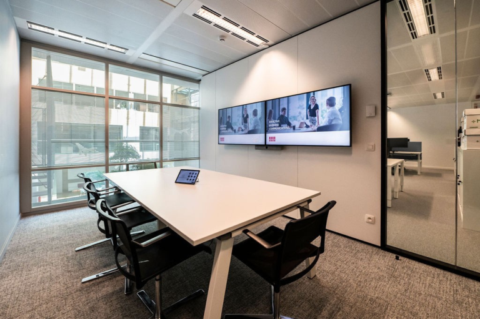
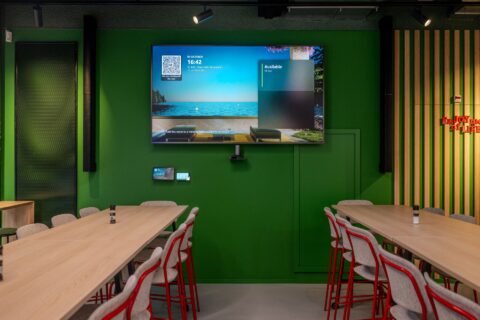
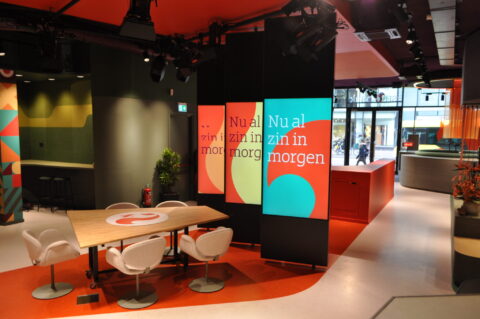
As we walked through the building, I noticed dozens of digital signage screens constantly displaying information. Every meeting room had large displays. All of them were switched on, even when nobody was using the room.
“And this equipment?” I asked. “How sustainable is it?”
Silence.
“We’ve actually never looked into that.”
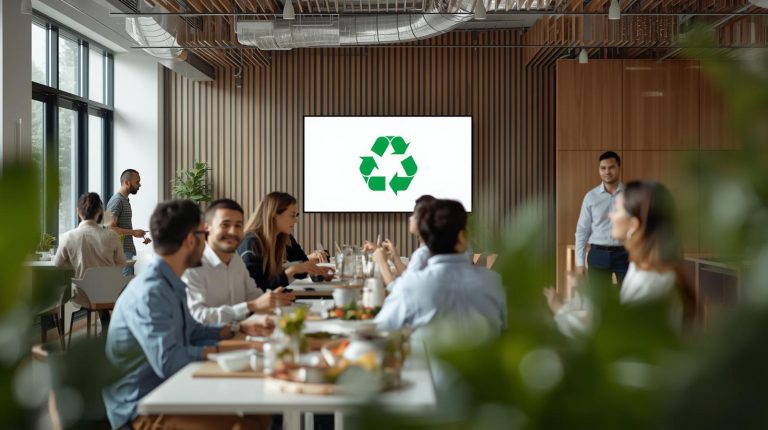
Why everyone has already made catering more sustainable
This organisation isn’t an exception. Most companies have already made major improvements to their catering:
- Organic products have become standard. In almost every catering tender, organic products are now a requirement rather than a nice-to-have.
- Less meat, more plant-based choices. Meat-free days, plant-based alternatives and conscious efforts to reduce CO₂ impact. Many organisations run initiatives such as Meatless Monday or offer plant-based options alongside traditional dishes as standard.
- Local suppliers and seasonal produce. Transport is minimised and local economies are supported. Caterers work with nearby farmers and adjust menus according to what’s in season.
- Measures to reduce waste. Accurate ordering, donating leftovers and composting organic waste. Modern caterers use smart forecasting models to minimise food waste.
- Transparency about origin and impact. Signs at the buffet explain where food comes from and how waste has been reduced. Employees can often see the environmental impact of their lunch choices through QR codes.
In short, organisations have optimised their catering sustainability efforts in great detail. Yet the same can’t always be said for another significant impact factor within buildings: audiovisual installations.

Why AV installations are often overlooked
The same organisations that have transformed their catering often still have meeting rooms full of energy-hungry displays running for long hours every day. Digital signage continues operating, but nobody questions where the equipment came from or what happens to it after its useful life.
Let’s look at the reality:
- Scope 3 emissions are completely overlooked. You know exactly where your tomatoes come from, but you probably don’t know the CO₂ impact of your AV equipment, from manufacturing and transport through to energy consumption.
- Circularity is rarely considered. Your caterer composts organic waste, but what happens to your old displays? Are components reused, refurbished or recycled?
- Energy consumption goes unchecked. You pay attention to energy-efficient lighting, but what about a meeting room display that’s running ten hours a day?
“It’s like serving organic vegetables on disposable plastic plates.” Kjeld Veenhuis Account Manager AVEX
Why organisations focus on catering but forget AV
This blind spot is usually caused by three persistent misconceptions.
Misconception 1: AV belongs under IT, not sustainability
Misconception 2: Digital signage and meeting room AV don't have much impact
Misconception 3: Sustainable AV is too expensive and complicated
A 3-step plan for sustainable AV installations
The good news? You can use the same approach that’s already worked so well for catering.
Step 1: Assess your current AV footprint
- Map the energy consumption of your meeting room displays and digital signage, including standby usage.
- Review the lifecycle of your equipment. When was it purchased? How long is it expected to last? When is replacement likely?
- Identify where the biggest environmental impact sits. Look beyond energy consumption and consider circularity and supply chain responsibility, including Scope 3 emissions. Just as you assess the entire food chain from farm to plate, you should examine the full lifecycle of your AV equipment.
Step 2: Define sustainability criteria for AV
- Make reducing CO₂ emissions a core requirement for new meeting room and digital signage solutions, just as organic products have become a standard requirement in catering.
- Include circularity and reuse requirements for displays and presentation systems.
- Ask suppliers for transparent reporting. If your caterer can explain the origin and impact of every ingredient, your AV supplier should be able to do the same for your equipment.
Step 3: Make it visible
- Use your digital signage to communicate your sustainability ambitions. For example: “This display reduces CO₂ emissions and is part of our circular AV strategy.”
- Share your sustainable AV choices within meeting rooms and visitor spaces.
- Use your screens as a visible demonstration of your sustainability leadership, just as caterers highlight initiatives that reduce food waste.
Realistic timelines for sustainable AV
Your catering didn’t become sustainable overnight, and your AV strategy doesn’t need to either.
- Phase 1: Baseline assessment and criteria development (1-2 months)
Assess your current situation and establish sustainability requirements for future purchases. - Phase 2: Pilot i n one meeting room (3 months)
Test your new criteria in a single space and gather data and feedback. - Phase 3: Rollout to other spaces (6-36 months)
Replace equipment gradually through natural replacement cycles. - Phase 4: Full integration into procurement policy
At this stage, sustainable AV becomes just as standard as sustainable catering.
From blind spot to competitive advantage
That organisation with the organic lunches and energy-hungry displays? They’re now working with us on a pilot for circular meeting rooms. After carrying out a detailed baseline assessment and defining sustainability criteria, they’re preparing to launch their first test project.
They realised that the same approach they used for catering could also be applied to AV. The same methodology. The same principles. The same transparency.
Their expectation is that they’ll reach their sustainability targets faster than planned. Stakeholders will see an organisation that’s consistent in its sustainability ambitions. Employees will feel proud to work for a genuinely sustainable organisation, not just in the canteen but throughout the entire building.
Making AV more sustainable doesn’t have to be complicated. At AVEX, we’ve pioneered BRIX zero, the Netherlands’ first fully circular AV concept. We help organisations make the transition to genuinely sustainable AV in the same structured way they once transformed their catering.
Ready to turn your AV blind spot into your next sustainability advantage?
Start small with a pilot in a single meeting room and see how straightforward it can be to make your AV just as sustainable as your catering already is.

Kjeld Veenhuis
Account Manager

Publication date
12 September 2025
Updated date
25 August 2026
Sector
Hospitality
Solution
BRIX zero, Digital Signage
Keep discovering